Food Solutions: Climate Change Action for K-2
Grades: K, 1, 2
Type: Lesson Plans
Subjects: Science, Social Studies
Authors: Alicia Fuller, Vanessa Go, Misty Goodman
Location: Earth, North America > United States
This resource has been reviewed by SubjectToClimate's climate scientists and verified for scientific accuracy and up-to-date information. Learn about our review process →
This resource has been reviewed by SubjectToClimate's climate scientists and verified for scientific accuracy and up-to-date information. Learn about our review process →
Synopsis
NOTE: This resource is temporarily unavailable
- This three-lesson curriculum from Climate Generation will take six 40-minute class periods and will show students the relationship between climate and food.
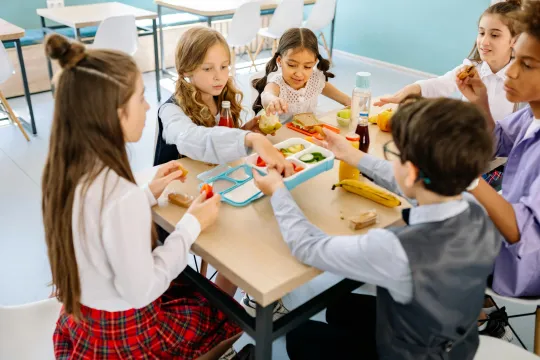
- In Lesson 1, students will learn about where food comes from, what characterizes sustainable food, the difference between weather and climate, the difference between natural, processed, and ultra-processed foods, how food gets from one region to another like avocados from Central America to the student's community, and how transporting food contributes to air pollution.
- In Lesson 2, students will understand what it means to eat seasonally and locally, demonstrate how air pollution from transporting foods is linked to the greenhouse effect, try foraging for wild foods, and discuss food insecurity.
- In Lesson 3, students will create a student action plan to implement a sustainable food project in their school.
Teaching Materials
Positives
- This curriculum was created in collaboration with K-2 teachers with real classroom experience.
- The stories, models, and hands-on activities do an excellent job of introducing heavy or abstract topics like food insecurity, the greenhouse effect, and food supply chains in a way that is accessible for kids.
- Throughout the lesson, students are supported with movement breaks and strategies for processing big emotions.
Prerequisites
- Teachers will need to create an account, add the free program to the cart, and check out to have access to the PDF. Checkout will not require payment information.
- The video for the Eric Carle book in Lesson 2 is no longer available. Teachers can see if this book is available to borrow from the library.
- Talking about food insecurity may make some students uncomfortable, especially if it is something they are familiar with and feel ashamed about. Teachers should reiterate the message that everyone needs help sometimes, and that is okay. Teachers should also not require students to share their own experiences with this particular topic.
- The e-book My Green Lunch by Colleen Hord, linked in Lesson 3, can't be fully read for free.
Differentiation & Implementation
- Using the vocabulary lists for each lesson, students can create flashcards or word walls to refer to throughout the lesson.
- When students are participating in outside activities, especially those where they are collecting things in nature, it is important to remind students to be respectful of their environment.
- Teachers can make community connections by inviting local farmers to speak about what they do to produce the foods that students eat. If the classrooms have students that live on a farm or those that have a home garden, those students can also share their experiences.
- Students can use resources in the SubjecttoClimate database for their action project, depending on what they want to do. For example, students can create a pollinator garden, making sure to add edible plants.
This resource from Climate Generation introduces young students to the connections between food systems and climate change through three separate lessons. The curriculum is clear, well-organized, and aligned with NGSS and social justice frameworks. Activities are engaging and hands-on, including mapping exercises, discussions on food justice, and school-based sustainability projects. Indigenous knowledge and socio-emotional learning are integrated throughout. The resource provides well-cited references, though quantitative data and visualizations are missing. Nonetheless, it would be a valuable resource for educators seeking to enhance climate-related learning experiences in the classroom.
Teaching Tips
Standards
Resource Type and Format
Scientist Reviewed
This resource has been reviewed by SubjectToClimate's climate scientists and verified for scientific accuracy and up-to-date information. Our review process ensures that every resource in our library reflects the current state of climate science.
Learn about our review process →