Exploring the World's Largest Coastal Temperate Rainforest
Provided by: The Nature Conservancy|Published on: September 7, 2023|Last updated: July 16, 2026
Grades: 3, 4, 5, 6, 7, 8
Type: Lesson Plans
Subjects: Biology, Earth and Space Sciences, Geography
Authors: Nature Lab by The Nature Conservancy
Location: North America, North America > United States, North America > United States > Washington
This resource has been reviewed by SubjectToClimate's climate scientists and verified for scientific accuracy and up-to-date information. Learn about our review process →
This resource has been reviewed by SubjectToClimate's climate scientists and verified for scientific accuracy and up-to-date information. Learn about our review process →
Synopsis
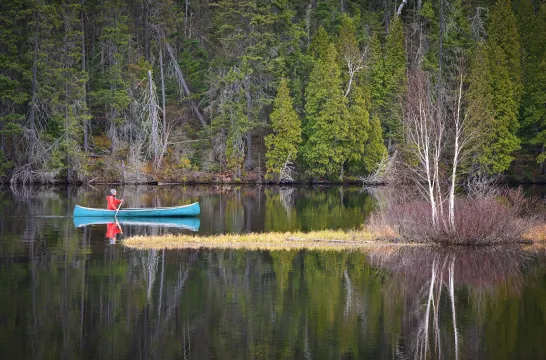
- This lesson by Nature Lab examines the Emerald Edge rainforest, the animals that live in there, and the environmental stewardship of Indigenous people who live in this forest.
- Students will watch a video that features a First Nation member, fill out worksheets that gauge comprehension and prior knowledge, and engage in a game that allows students to identify animals from the Emerald Edge.
Teaching Materials
Positives
- This lesson examines logging and how it can impact a landscape.
- This lesson explores the life cycle of a canoe.
Additional Prerequisites
- This is the link to the Virtual Emerald Edge Field Trip video, just scroll down to the video.
- There's a video link in the Related Resources section, but clicking it won't take you to a new tab.
- Students should have a basic understanding of Indigenous peoples and their culture.
- Students should understand the concepts of ecosystems and biodiversity, as well as the effects of using and overusing natural resources, such as trees.
Differentiation
- To assess prior knowledge, the teacher could ask the class questions about conservation and environmental stewardship before continuing the lesson.
- This lesson could accompany a brainstorming session where students consider different methods of conservation and environmental activism.
- Teachers could use this lesson as a conceptual introduction to carbon sinks and their importance.
- This lesson could enhance a classroom discussion on the differences between Native American culture and mainstream American culture.
- Students can discuss the differences between industrial logging and fishing and the use of fishing and woodworking in the Tla-O-Qui-Aht First Nations culture.
This is a great lesson plan involving a virtual field trip to the largest coastal temperate rainforest that stretches from Washington state to Southeast Alaska, a nature spy student handout, field trip log, vocab graphic organizer, and some discussion questions for older students. This lesson plan includes many links to various topics surrounding the temperate rainforest of the west coast. This resource would be a great addition to a classroom discussion about rainforests and their impact on the climate, both locally and globally.
Teaching Tips
Standards
Resource Type and Format
Scientist Reviewed
This resource has been reviewed by SubjectToClimate's climate scientists and verified for scientific accuracy and up-to-date information. Our review process ensures that every resource in our library reflects the current state of climate science.
Learn about our review process →