Environmental Justice and Air Quality
Provided by: Children's Environmental Literacy Foundation|Published on: February 26, 2024|Last updated: July 16, 2026
Grades: 6, 7, 8
Type: Lesson Plans
Subjects: Social Studies, Biology, Health
Authors: Children's Environmental Literacy Foundation, Highland Electric Fleets
Location: North America, North America > United States, North America > United States > New York
This resource has been reviewed by SubjectToClimate's climate scientists and verified for scientific accuracy and up-to-date information. Learn about our review process →
This resource has been reviewed by SubjectToClimate's climate scientists and verified for scientific accuracy and up-to-date information. Learn about our review process →
Synopsis
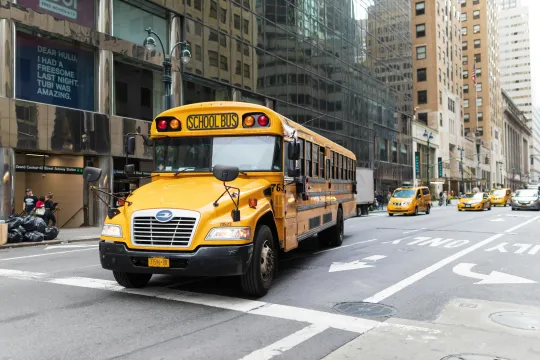
- This multi-lesson unit encourages students to consider how their school's transportation system impacts student health and air quality, from an environmental-justice perspective.
- Students will map their community, discuss examples of environmental injustice, collect and analyze data regarding the particulate matter around their school, practice using air quality monitoring tools, read about the Clean Air Act, research the sustainability of electric buses compared to diesel or gas buses, and create an action plan to improve their school's transportation system.
Teaching Materials
Positives
- The videos and messaging about young students taking action to influence change will empower and inspire students.
- Because this topic is directly related to student health, many will be motivated to engage with the activities.
Additional Prerequisites
- Students should know the features of a map, such as the scale, key, and labels.
- Several of the activities and extensions use a Quick Write. It may benefit students to set and model expectations for this procedure.
- The link for the YVP Action Framework in the How to Develop Your Action Plan section is broken.
- The "PM2.5 and your health" link goes to a general YouTube home page. The specific video is here.
- The Key Elements section of "The Plain English Guide to the Clean Air Act" uses "mental retardation" as a clinical term. You may need to address this with students in contrast to its use as a pejorative term.
- The article "Children's Exposure to Exhaust on School Buses" centers around Connecticut statistics and information.
- The link for the video "Young Voices for the Planet: Kids vs. Global Warming" doesn't work. Teachers can find the video here.
- The Young Voices for the Planet "ACTION Plan" no longer exists.
- Some activities require materials such as microscopes, magnifying glasses, and air quality monitoring devices.
Differentiation
- Teachers can easily differentiate for different reading levels in the jigsaw reading activity, as the sections vary in length and complexity.
- While this lesson is intended for New York students, most of the information is general and would benefit students from anywhere in the United States.
- The unit plan includes countless options for extensions, interdisciplinary connections, and differentiation for older students.
- English language learners may benefit from additional visual aids when discussing unfamiliar concepts, such as particulate matter.
It can be difficult for students to understand how climate change can impact communities across the country and beyond. This activity is meant to help students see that connection. The climate science within the lesson is accurate and well cited, and more information is available if needed. This resource is recommended for teaching.
Teaching Tips
Standards
Resource Type and Format
Scientist Reviewed
This resource has been reviewed by SubjectToClimate's climate scientists and verified for scientific accuracy and up-to-date information. Our review process ensures that every resource in our library reflects the current state of climate science.
Learn about our review process →