Energy Conversions
Provided by: ExploreLearning|Published on: April 27, 2021|Last updated: July 16, 2026
Grades: 3, 4, 5, 6, 7, 8
Type: Activity - Classroom
Subjects: Biology, Physics, Earth and Space Sciences
Authors: ExploreLearning
Location: Earth
This resource has been reviewed by SubjectToClimate's climate scientists and verified for scientific accuracy and up-to-date information. Learn about our review process →
This resource has been reviewed by SubjectToClimate's climate scientists and verified for scientific accuracy and up-to-date information. Learn about our review process →
Synopsis
- This interactive web application and accompanying resources allow students to explore where energy comes from and how it powers our lives by tracing the path of energy from the sun as it converts from one form to another.
- Students will follow the scientific method by creating a hypothesis, running tests, collecting data, analyzing the data, and drawing conclusions from the results.
Teaching Materials
Positives
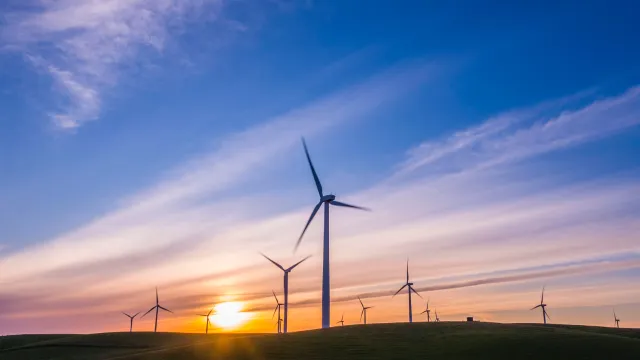
- This resource allows students to explore some renewable energy sources like solar, wind, hydropower, and biomass.
Additional Prerequisites
- The accompanying resources include a student exploration sheet, answer key, teacher guide, and vocabulary sheet.
- To access the interactive media for more than 5 minutes a day, teachers must create a Gizmo account. The free trial period is currently 30 days.
- The student activity and vocabulary sheets are available without signing up, however, the teacher guide and answer key are only available with a subscription.
Differentiation
- If students do not have access to devices, teachers can use this resource as a demonstration and work through the activity as a class.
- If students have access to devices, this resource can be used as an independent or small group classroom activity, or as a homework assignment.
- This resource can be used in physical science, Earth science, or life science classes when learning about energy sources, energy conversion, renewable energy, and the interactions between living and non-living systems.
Renewable energy sources are visualized and this resource is suitable for students to learn how energy is created and transformed. This resource is recommended for teaching.
Teaching Tips
Standards
Resource Type and Format
Scientist Reviewed
This resource has been reviewed by SubjectToClimate's climate scientists and verified for scientific accuracy and up-to-date information. Our review process ensures that every resource in our library reflects the current state of climate science.
Learn about our review process →