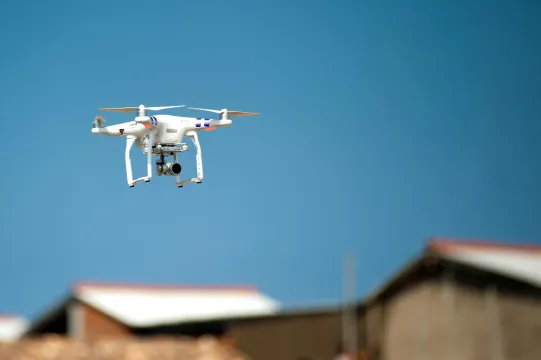
Drone Sweeps Plastic from Lake Michigan Shoreline
Provided by: Grand Valley State University|Published on: February 25, 2026|Last updated: July 16, 2026
Grades: 6, 7, 8, 9, 10, 11, 12
Type: Articles/Websites
Subjects: Earth and Space Sciences
Authors: GVNext, Brian Vernellis
Location: North America > United States > Michigan, North America > United States > Ohio, North America > United States > Wisconsin

This resource has been reviewed by SubjectToClimate's climate scientists and verified for scientific accuracy and up-to-date information. Learn about our review process →
This resource has been reviewed by SubjectToClimate's climate scientists and verified for scientific accuracy and up-to-date information. Learn about our review process →
Synopsis
- In this article from Grand Valley State University’s GVNext, students will learn about the Laker Raker drone and how it retrieves plastic from the Great Lakes.
- Students will learn about the groups and organizations that have contributed to this project, as well as the importance of education and outreach in this project’s success.
Teaching Materials
Positives
- This article highlights an excellent example of different states and organizations teaming up to protect an important natural area.
- Students will enjoy reading about how tech can be used in innovative ways to make positive changes.
Prerequisites
- Before students read the article, teachers may want to explain how plastics can break down into microplastics.
Differentiation & Implementation
- Teachers can use this story to inspire students to think of innovative solutions to an environmental problem.
- This article can be paired with a lesson about global plastic pollution to make connections to SDG 14, Life Below Water, and to show students how their local context fits into this global issue.
- Students can explore their school grounds or a local park to determine if it needs to be cleaned up. Students can organize a traditional clean-up day or take an innovative approach like the one in the article.
- Students can explore the economic and cultural importance of the Great Lakes to understand why cleaning up pollution in them is important.
This article discusses the success of a beach cleaning drone on the shores of Lake Michigan. The amounts and types of trash the drone removes are also explained. The article provides a great example of what is being done now to protect our environment and how communities and different organizations can successfully work together to address environmental problems. The information presented is accurate and this resource is recommended for teaching.
Teaching Tips
Standards
Resource Type and Format
Scientist Reviewed
This resource has been reviewed by SubjectToClimate's climate scientists and verified for scientific accuracy and up-to-date information. Our review process ensures that every resource in our library reflects the current state of climate science.
Learn about our review process →