Conoce Tu Bahía: Nestucca
Provided by: Friends of Netarts Bay|Published on: January 16, 2024|Last updated: July 16, 2026
Grades: K, 1, 2, 3, 4, 5
Type: Videos
Subjects: Biology, Earth and Space Sciences, Geography
Authors: Friends of Netarts Bay
Location: North America, North America > United States, North America > United States > Oregon

This resource has been reviewed by SubjectToClimate's climate scientists and verified for scientific accuracy and up-to-date information. Learn about our review process →
This resource has been reviewed by SubjectToClimate's climate scientists and verified for scientific accuracy and up-to-date information. Learn about our review process →
Synopsis
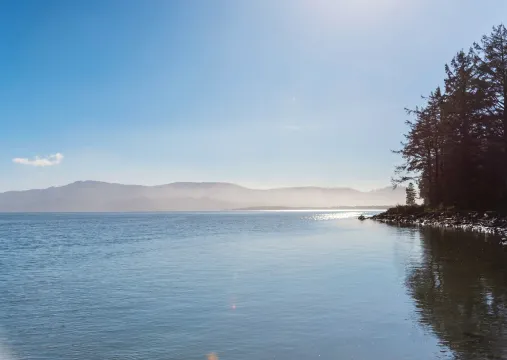
- This Spanish-language video teaches students about the ecosystem and geography in Nestucca Bay on the coast of Oregon.
- Students learn about the impact of tides, estuaries, and changing seasons on the area.
- This video is one of a series of videos introducing students to the coast of Oregon.
Teaching Materials
Positives
- The animation and bright visuals will keep students' attention, along with the enthusiastic narration.
- The video uses maps and examples to help students comprehend the layout of a bay in relation to rivers, streams, and the ocean.
Additional Prerequisites
- Teachers and students need access to the internet.
- Teachers should know that the subtitles do not always have an exact translation.
- Because the vocabulary is rigorous, a definition list will be helpful. Students can also complete a fill-in-the-blank vocabulary assignment while watching and pausing the video.
Differentiation
- This information will be helpful in a Science class with a lesson about tides and their effects on bays and estuaries.
- The term "wildlife refuge" is mentioned and defined so an English teacher can have students research the types of animals found in Pacific Northwest wildlife refuges.
- This video can enhance prior lessons about ecosystems and habitats.
- The lesson can be used for climate change education by connecting it to the issue of rising sea levels and the effects on wildlife in and near the sea.
This resource video is a primer on Nestucca Bay in Oregon. The information is accurate, and sources are provided. This resource is recommended for teaching.
Teaching Tips
Standards
Resource Type and Format
Scientist Reviewed
This resource has been reviewed by SubjectToClimate's climate scientists and verified for scientific accuracy and up-to-date information. Our review process ensures that every resource in our library reflects the current state of climate science.
Learn about our review process →