Climate Change in Your Backyard
Provided by: National Center for Science Education|Published on: May 9, 2022|Last updated: July 16, 2026
Grades: 9, 10, 11, 12
Type: Lesson Plans
Subjects: Earth and Space Sciences, Geography
Authors: National Center for Science Education
Location: Earth, North America, North America > United States

This resource has been reviewed by SubjectToClimate's climate scientists and verified for scientific accuracy and up-to-date information. Learn about our review process →
This resource has been reviewed by SubjectToClimate's climate scientists and verified for scientific accuracy and up-to-date information. Learn about our review process →
Synopsis
- In this lesson plan, students draw connections between extreme weather events and climate change on a global and regional scale, starting off with a fun "loaded dice" activity.
- Students learn about the wildfires in Australia, view and analyze maps and terms related to extreme weather events, explore a region-specific type of extreme weather, and test out engineering designs to develop a sustainable city that can avoid the urban heat-island effect.
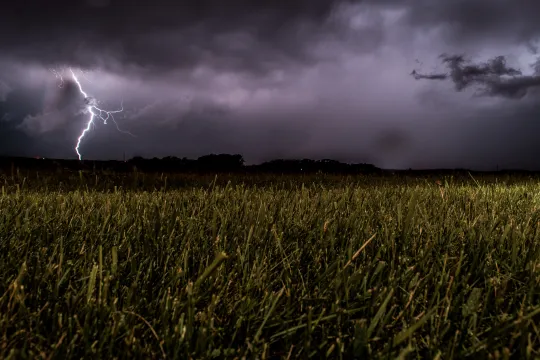
- Students can select from five different weather-related events to investigate, based on their region or area of interest: wildfires, tornadoes, precipitation events, hurricanes, and droughts.
- Teachers will need to scroll down to this lesson on the initial page.
Teaching Materials
Positives
- This lesson addresses two common misconceptions about the relationship between climate change and extreme weather events and lets students figure them out through classroom activities.
- The lesson can be tailored to the weather conditions in specific regions, making it more relevant and engaging for students.
- Students may enjoy the "Cupcake Watch vs. Cupcake Warning" analogy to understand weather terminology associated with extreme events.
Prerequisites
- This lesson plan is designed to take 6 class periods, if all activities are completed.
- This is lesson 4 in NCSE's Climate Change Lesson Set Series and it is recommended that students complete prior lessons first or be introduced to the FLICC method for recognizing science denial and part E of Lesson 1 before starting this lesson (links are included in the lesson plan).
- The experiment and opening activity require some unusual materials that may not be readily available including loaded dice, flex seal liquid, kinetic sand, and an infrared thermometer.
- All materials for this lesson, including alternatives and extensions can be found in this google drive folder.
Differentiation & Implementation
- The "prerequisite student knowledge" activity is to write an extreme weather autobiography or reflection paper. Science teachers could partner with an ELA teacher for this to create an interdisciplinary connection.
- Geography classes could use Part A as a stand-alone activity to engage students in creating and interpreting maps and math classes could expand on the data collection and analysis from the activities.
- Instead of choosing one activity of regional significance, teachers could allow students to choose the type of extreme weather they are most interested in learning more about. Alternatively, teachers could assign groups of students to each type of weather event and have groups share out what they learn.
- Other resources that connect extreme weather events and climate change include this online course from NEEF and this Columbia Climate School article.
The resource underpins the impact of extreme weather on climate. This is valid and recommended for teaching. On page 10 of the resource, educators should note the misspelling on the vacation chart "Mean dailey" is used instead of mean daily. Other content with activities is valid.
Teaching Tips
Standards
Resource Type and Format
Scientist Reviewed
This resource has been reviewed by SubjectToClimate's climate scientists and verified for scientific accuracy and up-to-date information. Our review process ensures that every resource in our library reflects the current state of climate science.
Learn about our review process →