Building a Vermicomposter Action Toolkit
Synopsis
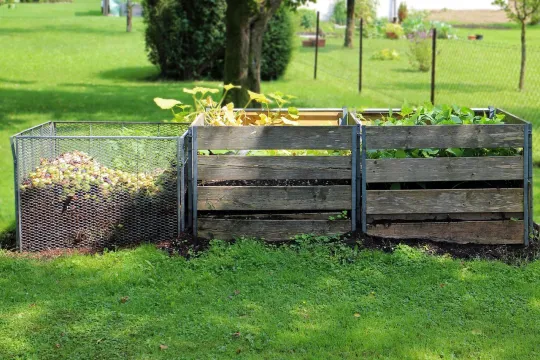
- This resource is a collection of activities centered around building a vermicomposter using red wiggler worms to turn organic waste from school lunches into fertilizer and save it from landfills.
- Students will learn how waste is traditionally disposed of, ways to reduce waste, the benefits of composting, how to build and maintain a vermicomposter, and how to feed and care for worms.
- The resource includes various activities, such as mind maps, scientific experiments, trivia games, data collection, and graphing.
Teaching Materials
Preparation:
There is some significant teacher preparation and materials required. Teachers must provide red wiggler worms, Rubbermaid bins and lids, garden soil, trays, eggshells, newspaper, wooden splints, string, gloves, sensitive scales, and a power drill.
If not in Canada, tweak the resource as needed.
Note that this toolkit is also available in French.
The resource provides student worksheets throughout the PDF, and there is a link at the bottom of page 3 to access them as Google Docs.
The Global Goals webpage link on page 5 and the Waste Reduction Week Canada - Resources link on page 39 are broken.
Recruit other classes to adopt a compost bin to maintain. The resource suggests one class per 1-2 compost bins.
Review the appendices for necessary information about caring for the worms and maintaining the vermicomposter.
Differentiation:
Some students may not want to work with the worms. Teachers should encourage but not force students to touch the worms.
Classroom Implementation:
Use the resource in science classes to learn about worms, composting, ecosystems, and biotic vs abiotic factors.
Use the resource in Earth science classes to learn about waste reduction, food waste, and sustainability.
Reflection questions accompany many activities. Use these for independent journaling, small group discussions, or whole class share-outs.
Extensions:
There are numerous links to additional resources throughout the lesson that can be used to learn more about topics of interest.
The lesson includes multiple extension activities and assessment options.
Interdisciplinary Connections:
Math:
Highlight the data collection, analysis, and graphing activities.
Scientist Reviewed
This resource has been reviewed by SubjectToClimate's climate scientists and verified for scientific accuracy and up-to-date information. Our review process ensures that every resource in our library reflects the current state of climate science.
Learn about our review process →