Bird Olympics Activity
Provided by: Michigan Audubon Society|Published on: February 25, 2026|Last updated: July 16, 2026
Grades: 3, 4, 5
Type: Activity - Classroom
Subjects: Science
Authors: Michigan Audubon
Location: Earth, North America > United States > Michigan

This resource has been reviewed by SubjectToClimate's climate scientists and verified for scientific accuracy and up-to-date information. Learn about our review process →
This resource has been reviewed by SubjectToClimate's climate scientists and verified for scientific accuracy and up-to-date information. Learn about our review process →
Synopsis
- This classroom activity from Michigan Audubon Society introduces students to bird adaptations through five rotating “Bird Olympics” stations, each focused on a different species and survival skill.
- Students complete hands-on challenges that model wingspan, balance, night vision, wing speed, and diving speed to explore how physical traits help birds migrate, stay warm, hunt, and capture prey.
Teaching Materials
Positives
- This activity is a great way for kinesthetic learners to connect with animal adaptations.
- Students will love the competitive nature of this activity.
Prerequisites
- Students should know how to use a measuring tape and use a conversion chart.
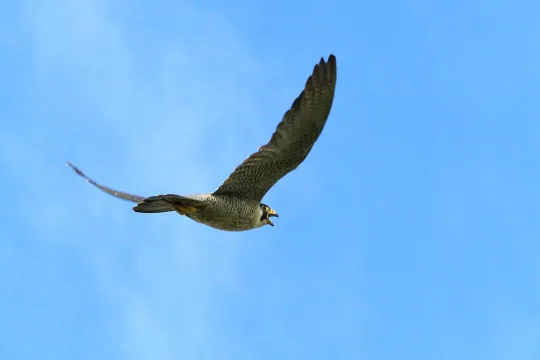
- At the Peregrine Falcon station, students will need a conversion chart to convert yards per minute/second into miles per hour. This chart is not included.
- Teachers will need to prepare the materials listed at the end of this resource, including a data sheet for students to record their measurements at each station.
Differentiation & Implementation
- At the Blue Heron station, students can practice using timers or stopwatches by timing a partner to see how long they can stand on one foot.
- After learning about the different birds, teachers can introduce students to migration and explain how climate change can impact the migration patterns of birds. This module can help explain the connection between seasons and migration.
- The activities could be used in a physical education or gym class.
- These stations can be used to make connections to the UN Sustainable Goal 15, Life on Land.
This activity uses physical action to educate students on several bird species’ adaptations to their habitats. The directions, station sheets and data sheets all feature clear text, and great care is taken to explain why different bird species developed different evolutionary adaptations. This resource is recommended for teaching.
Teaching Tips
Standards
Resource Type and Format
Scientist Reviewed
This resource has been reviewed by SubjectToClimate's climate scientists and verified for scientific accuracy and up-to-date information. Our review process ensures that every resource in our library reflects the current state of climate science.
Learn about our review process →