Biodiversity Series: Reptiles Survey
Provided by: National Environmental Education Foundation (NEEF)|Published on: August 20, 2026|Last updated: September 3, 2026
Grades: 6, 7, 8
Type: Lesson Plans
Subjects: Biology, Mathematics
Authors: National Environmental Education Foundation (NEEF), Frost Science
Location: North America > United States > Florida

This resource has been reviewed by SubjectToClimate's climate scientists and verified for scientific accuracy and up-to-date information. Learn about our review process →
This resource has been reviewed by SubjectToClimate's climate scientists and verified for scientific accuracy and up-to-date information. Learn about our review process →
Synopsis
- In this project, students research the relationship between the invasive Cuban brown anole and the native green anole in South Florida, then conduct their own repeated reptile surveys and analyze the results with basic statistics and graphs.
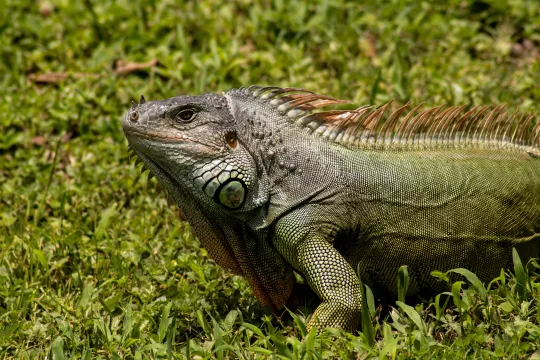
- The background reading describes how non-native reptiles such as green iguanas, Argentine black and white tegus, and Burmese pythons have disrupted Florida's native ecosystems.
Teaching Materials
Preparation:
- Students conduct their survey three times and need to keep conditions such as time of day, weather, and site consistent, so plan for repeated visits to the same location.
- Ask students to wear closed-toe shoes and long pants for outdoor survey days.
- If you plan on having students use electronic devices for species identification, make sure they download the iNaturalist app ahead of time.
Classroom Implementation:
- The project is strongly quantitative and requires teachers to pre-teach mean, median, and range and to discuss which measure is most useful for understanding a population.
- The provided Mosquito Lagoon counts of green and brown anoles across two years make a striking graphing exercise and a springboard for discussing how quickly an invasive species can displace a native one.
- Incorporate the checklist to determine if a source is credible as a classroom routine and expectation.
Teaching Tips
Standards
Resource Type and Format
Scientist Reviewed
This resource has been reviewed by SubjectToClimate's climate scientists and verified for scientific accuracy and up-to-date information. Our review process ensures that every resource in our library reflects the current state of climate science.
Learn about our review process →