America's Big Year of Climate Action Educator Guide
Provided by: MIT Environmental Solutions Initiative|Published on: September 22, 2023|Last updated: July 16, 2026
Grades: 9, 10, 11, 12, AP
Type: Lesson Plans
Subjects: Science, Economics, Civics
Authors: MIT Environmental Solutions Initiative
Location: North America, North America > United States
This resource has been reviewed by SubjectToClimate's climate scientists and verified for scientific accuracy and up-to-date information. Learn about our review process →
This resource has been reviewed by SubjectToClimate's climate scientists and verified for scientific accuracy and up-to-date information. Learn about our review process →
Synopsis
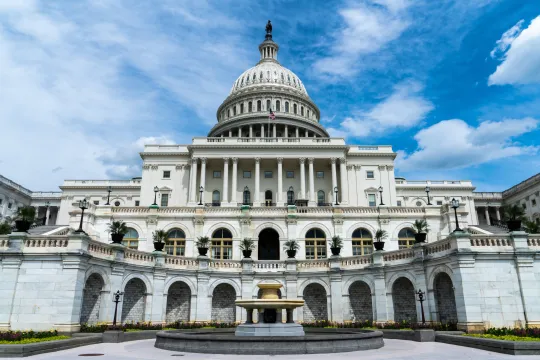
- This lesson plan uses hands-on activities and a podcast to teach students about recent legislation in the United States, how the acts seek to combat climate change, and how the government uses incentives and disincentives to promote change.
- After listening to the podcast, students will become experts on one of the acts, participate in an expert panel, create mind maps to organize related ideas in each act, and draft their own bill to address a climate change issue.
Teaching Materials
Positives
- This guide emphasizes a trauma-informed approach when discussing climate change and gives excellent suggestions for meaningful and sensitive learning in the classroom.
- The creators of this resource encourage users to adapt it to fit their needs and to share that adaptation with colleagues.
- Halfway through the activity, student groups are reorganized, which is a great way to get students working with multiple peers.
Additional Prerequisites
- Students may need the terms Superfund, brownfield, infrastructure, supply chain, semiconductor, legacy, biotechnology, and others defined before beginning the lesson.
- Students should understand what climate change is and how humans contribute to it through emissions of greenhouse gases.
- It may be beneficial for students to understand the legislative process, such as how a bill becomes law.
- Teacher and student pages can be edited and adapted by clicking the Google Drive links for each resource and clicking the Use Template button.
Differentiation
- Students can evaluate and discuss the ways in which each piece of legislation addresses or fails to address marginalized groups.
- Language arts students can practice their summarization skills by creating an infographic to inform students about their given piece of legislation.
- After drafting their bill, students in language arts classes can write a persuasive letter, urging constituents to support their bill.
Three recent American laws, the Inflation Reduction Act (IRA), Infrastructure Investment and Jobs Act (IIJA), and the CHIPS and Science Act of 2022, take major steps to address climate change. This podcast episode from MIT explains what these do and the progress they are making. All links are well sourced and the information provided is verifiable. This resource is recommended for teaching.
Teaching Tips
Standards
Resource Type and Format
Scientist Reviewed
This resource has been reviewed by SubjectToClimate's climate scientists and verified for scientific accuracy and up-to-date information. Our review process ensures that every resource in our library reflects the current state of climate science.
Learn about our review process →