Why Meat Is the Best Worst Thing in the World
Provided by: Kurzgesagt - In a Nutshell|Published on: April 27, 2021|Last updated: July 16, 2026
Grades: 6, 7, 8, 9, 10, 11, 12
Type: Videos
Subjects: Biology, Health
Authors: Kurzgesagt - In a Nutshell
Location: Earth
This resource has been reviewed by SubjectToClimate's climate scientists and verified for scientific accuracy and up-to-date information. Learn about our review process →
This resource has been reviewed by SubjectToClimate's climate scientists and verified for scientific accuracy and up-to-date information. Learn about our review process →
Synopsis
- This video outlines the devastating environmental and climate impacts of animal agriculture.
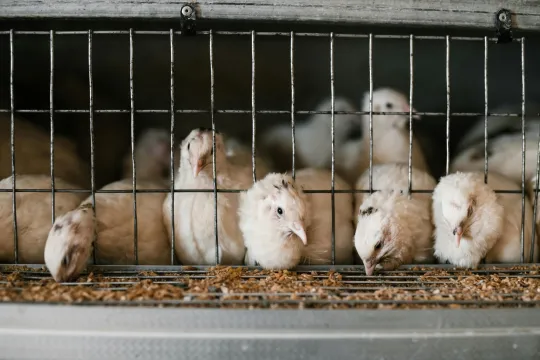
- The video explores animal welfare, factory farms, the problem with organic farming, and the philosophy of humans raising and slaughtering billions of animals every year.
- The video offers several solutions, including reducing meat consumption, buying from responsible producers, eating more chicken and pigs instead of cows, reducing food waste, and buying lab-produced meat.
Teaching Materials
Positives
- Beautiful animations, music, and narration make this easy to follow and understand.
- The video stresses that there is no connection between morality and what you choose to eat, which is nice to eliminate guilt for students who cannot control what meals are made at home.
Prerequisites
- Students should understand climate change.
- Animal agriculture has a huge impact on carbon emissions, land use, deforestation, and species extinction. It may be difficult for students to connect these broad and abstract issues.
- The meatpacking industry does tremendous harm to workers. You can learn more about the chicken industry in this video.
- Certified organic farms do follow a long list of environmental regulations that protect the environment and reduce emissions, along with animal welfare rules that can be accessed on the USDA website.
Differentiation & Implementation
- Social studies or economics students could discuss the sustainability of animal agriculture after watching this video and how it impacts human culture and food businesses.
- This video can be used as a catalyst for students to advocate for reduced meat consumption in their schools. Students could advocate for Meatless Mondays (or Tuesdays, Wednesdays, Thursdays, and Fridays too!)
- Students could watch this video or this video, both of which outline how eating more plants helps fight climate change.
The resource highlights the need to reduce meaty diets, especially from cruel farms. Organic farming is still a better alternative, and reducing dairy consumption is a good way to reduce carbon footprint. There is no contradiction in the data source. Thus, this resource is recommended for teaching.
Teaching Tips
Standards
Resource Type and Format
Scientist Reviewed
This resource has been reviewed by SubjectToClimate's climate scientists and verified for scientific accuracy and up-to-date information. Our review process ensures that every resource in our library reflects the current state of climate science.
Learn about our review process →