
Why Don't We Hear About the Ozone Hole Anymore?
Provided by: Hot Mess|Published on: April 27, 2021|Last updated: July 16, 2026
Grades: 6, 7, 8, 9, 10, 11, 12
Type: Videos
Subjects: Earth and Space Sciences, Civics
Authors: Hot Mess, PBS
Location: Earth
This resource has been reviewed by SubjectToClimate's climate scientists and verified for scientific accuracy and up-to-date information. Learn about our review process →
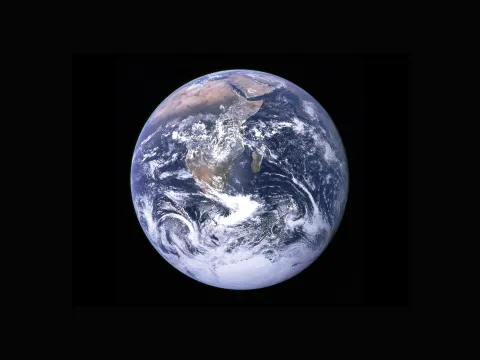
This resource has been reviewed by SubjectToClimate's climate scientists and verified for scientific accuracy and up-to-date information. Learn about our review process →
Synopsis
- This video from Hot Mess explains the remarkable success of the Montreal Protocol in banning the production of chlorofluorocarbons (CFCs) and other ozone-depleting substances.
- The video draws a comparison between our response to the ozone hole and the potential for similar action in the context of halting greenhouse gas emissions.
Teaching Materials
Positives
- This video offers a rare and hopeful glimpse at what it looks like when environmental policy works on a global level.
- The video highlights the fact that the Montreal Protocol was successful, in large part, because it required wealthier countries to support economically disadvantaged countries in phasing out CFCs.
Prerequisites
- The video begins with an advertisement.
- Though the ozone hole is just beginning to heal, the video may give the false impression that the ozone hole is nearly gone.
- Students will benefit from having some prior knowledge about climate change, greenhouse gas emissions, fossil fuels, and the Paris Climate Agreement.
Differentiation & Implementation
- Civics classes can compare and contrast the Montreal Protocol with the Paris Agreement.
- Economics classes can examine how the EPA's ban on CFCs created economic opportunities for companies to produce alternative chemicals, although many of those new chemicals also ended up being very powerful greenhouse gases.
- Chemistry classes can take a closer look at the chemical reactions that occur between CFCs and ozone.
- Students may also enjoy the resource, Essentials of Environmental Science: Understanding the Atmosphere, Climate Politics.
The Montreal Protocol, banning CFC chemicals, is one of the rare times we've seen international policy affect the planet. While this video does give a rather optimistic view on the status of the ozone layer hole, it is, in reality, far from "saved" and has many years to go to reach pre-1980 levels. This resource is recommended for teaching.
Teaching Tips
Standards
Resource Type and Format
Scientist Reviewed
This resource has been reviewed by SubjectToClimate's climate scientists and verified for scientific accuracy and up-to-date information. Our review process ensures that every resource in our library reflects the current state of climate science.
Learn about our review process →