
This Solar Powered Boat Could be the Future of Transportation
Provided by: Undecided with Matt Ferrell|Published on: April 27, 2021|Last updated: July 16, 2026
Grades: 9, 10, 11, 12, AP
Type: Videos
Subjects: Economics, History, Engineering
Authors: Undecided with Matt Ferrell
Location: Earth

This resource has been reviewed by SubjectToClimate's climate scientists and verified for scientific accuracy and up-to-date information. Learn about our review process →
This resource has been reviewed by SubjectToClimate's climate scientists and verified for scientific accuracy and up-to-date information. Learn about our review process →
Synopsis
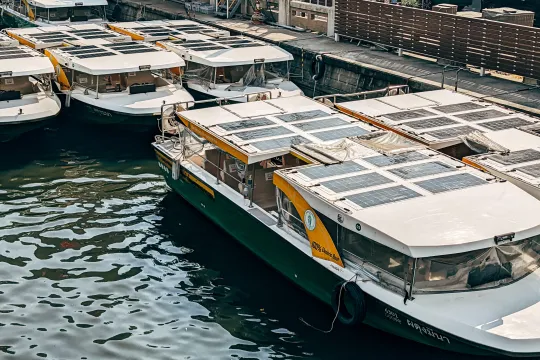
- This video traces the history and evolution of electric boats, including recent developments in solar-powered yachts and ferries.
- Students will learn that electric boats are silent, clean, lightweight, easy to maintain, and have low operational costs. However, downsides include higher initial costs and a shorter range compared to diesel-powered boats.
Teaching Materials
Positives
- The video does a good job of comparing the initial price and ongoing operational costs for diesel and electric boats.
- The video uses diagrams to illustrate how solar panels are used to create electricity.
Additional Prerequisites
- This video begins with an advertisement.
- The video content ends at 11:20.
- A link to the full transcript and sources can be found in the video description.
Differentiation
- Science, math, or economics classes could have students come up with a graphical way to represent the price and operating costs of diesel and electric boats.
- Science classes could research the solar-powered plastic collectors that were briefly mentioned in the video. Students could discuss how these devices could help and hurt the environment and ecosystems.
- Other resources on this topic include this video and worksheet on renewable energy, this interactive chart on energy consumption by source, and this Khan Academy video on how solar energy works.
This resource is a 13-minute video that looks at the current and future potential for solar-powered boats, including ferries and yachts. Examples of existing solar-powered boats are shown, and a fair amount of this video is related to the relative costs of solar-powered versus diesel-powered boats. This resource is recommended for teaching.
Teaching Tips
Standards
Resource Type and Format
Scientist Reviewed
This resource has been reviewed by SubjectToClimate's climate scientists and verified for scientific accuracy and up-to-date information. Our review process ensures that every resource in our library reflects the current state of climate science.
Learn about our review process →