
"The Heart of the Ocean"
Provided by: Sea Walls|Published on: July 26, 2022|Last updated: September 26, 2026
Grades: 6, 7, 8, 9, 10, 11, 12
Type: Artwork
Subjects: Visual and Performing Arts
Authors: Felipe Ortiz

This resource has been reviewed by SubjectToClimate's climate scientists and verified for scientific accuracy and up-to-date information. Learn about our review process →
This resource has been reviewed by SubjectToClimate's climate scientists and verified for scientific accuracy and up-to-date information. Learn about our review process →
Synopsis
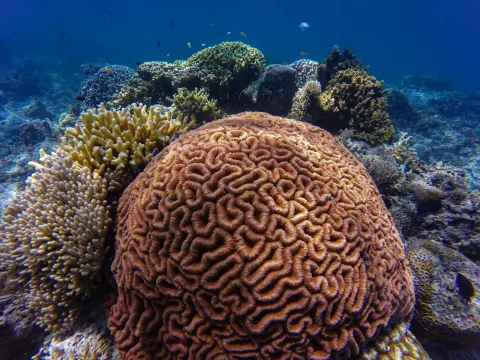
- This mural by Felipe Ortiz in Boston, Massachusetts depicts an imaginary coral reef that resembles an anatomical heart.
- The artist statement is a call to action to do our individual parts in the fight against warming oceans.
Teaching Materials
Positives
- Students can bring their own ideas and interpretations to the artwork, which will help them to develop critical thinking skills.
- This mural invites students to view the ocean from the level of marine life living on its floor.
- The resource provides action steps that individuals can take to reduce their carbon footprints.
Additional Prerequisites
- Students should understand how warming oceans affect the coral reefs and the sea life that depends on them.
Differentiation
- Art classes could discuss how the artist statement and the emotional nature of artwork can be used to persuade viewers to see an issue in a new way.
- Art students could analyze the composition of the mural and the contrast between bold, saturated colors and muted colors, and how the use of color delivers an emotional impact.
The resource describes sustainable ways to consume seafood and make eco-friendly choices to conserve marine resources from over-exploitation. This is recommended for teaching.
Teaching Tips
Standards
Resource Type and Format
Scientist Reviewed
This resource has been reviewed by SubjectToClimate's climate scientists and verified for scientific accuracy and up-to-date information. Our review process ensures that every resource in our library reflects the current state of climate science.
Learn about our review process →