
"A Hui Hou"
Provided by: Sea Walls|Published on: August 26, 2022|Last updated: July 16, 2026
Grades: 3, 4, 5, 6, 7, 8
Type: Articles/Websites
Subjects: Visual and Performing Arts
Authors: Kai Kaulukukui
Location: Earth, North America, North America > United States, North America > United States > Hawaii, Oceania
This resource has been reviewed by SubjectToClimate's climate scientists and verified for scientific accuracy and up-to-date information. Learn about our review process →
This resource has been reviewed by SubjectToClimate's climate scientists and verified for scientific accuracy and up-to-date information. Learn about our review process →
Synopsis
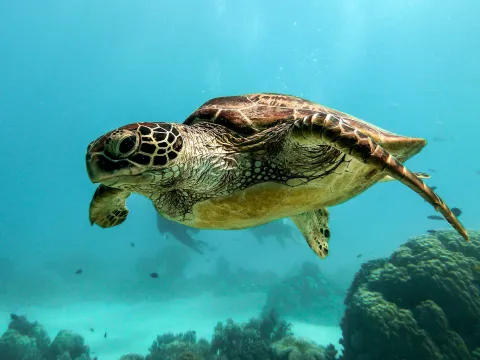
- This environmental mural by Hawai'ian artist Kai Kaulukukui depicts a green sea turtle tangled in fishing lines and plastic, while a child swims beside attempting to help it.
- The mural brings attention to the massive worldwide problem of plastic waste and how ocean currents connect all regions of the Earth, while also conveying hope for the power of positive change.
Teaching Materials
Positives
- The artist's statement helps shed light on the deeper symbolism of the images within the mural including the red sun representing Japan, the full moon, and the subdued color palette.
- Students may enjoy seeing photographs of the artist creating this mural in the gallery.
Additional Prerequisites
- It may help students to use the interactive map to see where Hawaii is located, as they explore the interconnectedness of the oceans and how worldwide plastic usage impacts this island.
- Teachers should ensure that students have an understanding of the Hawai'ian vocabulary used in the artist's statement, such as keiki and hona.
Differentiation
- After viewing the artwork, have students watch this video outlining the environmental injustice of the global plastic recycling system and then work to make determinations about the best methods for addressing plastic usage problems across the world.
- Students could research local recycling programs to see what can actually be recycled in their own communities and make signage to help people recycle better.
- Students can work in groups to compare "A Hui Hou" with The Popo's mural in Bali addressing plastic culture and analyze the artistic methods each artist chose to address this issue.
- In art classes, students could create their own work exploring ways that people can take action for the environment, including ways to avoid lifestyle choices with a high carbon impact.
The art piece displays how plastic pollution, garbage, and waste are disposed of indiscriminately into water bodies. There is a need to keep our environment and marine habitat pollution-free. The resource is recommended for teaching.
Teaching Tips
Standards
Resource Type and Format
Scientist Reviewed
This resource has been reviewed by SubjectToClimate's climate scientists and verified for scientific accuracy and up-to-date information. Our review process ensures that every resource in our library reflects the current state of climate science.
Learn about our review process →