World's Darkest Fabric Inspired by Black Bird
January 15, 2026

Goths everywhere can rejoice. There is a new contender for the world’s darkest fabric.
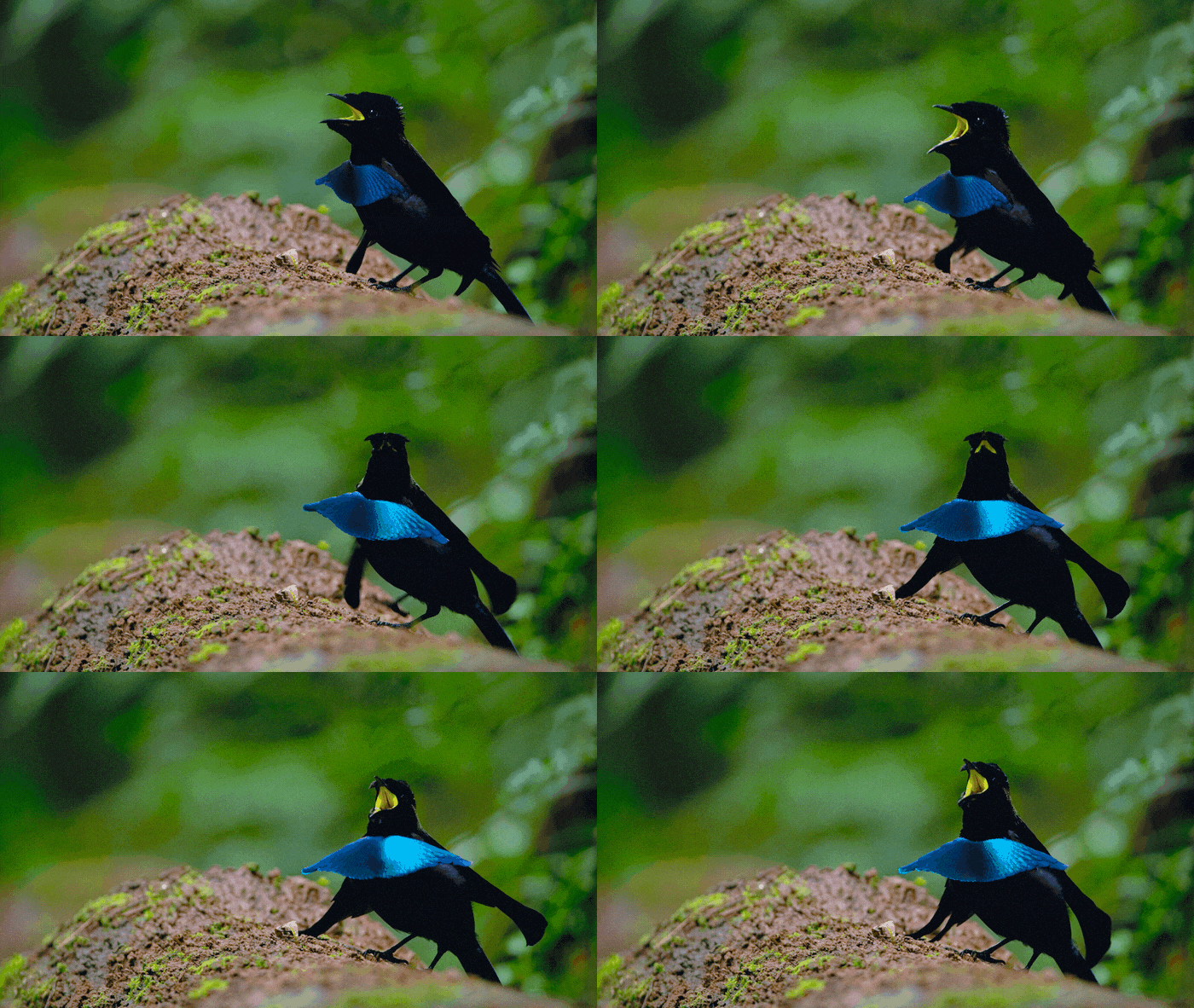
The inky-black fabric is able to absorb 99.87% of the light that strikes it. This fabric was designed by researchers at Cornell University. The team studied the feathers of New Guinea’s stunning riflebird. Its dark plumage catches light via tiny barbs and hooks on each wisp of feather. Those irregularities trap light. They make the fabric appear much darker.
For their fabric, Cornell’s scientists began with white wool. They dyed it with polydopamine. It's a synthetic form of the pigment that gives skin, hair, and feathers their color. Once the wool strands were dyed as fully as possible, they were exposed to electrically-charged gas particles. These shredded the outermost layers of the wool fibers. The shredding effect copied the barbs on the riflebird’s feathers.
“I’ve had (colleagues) come in when we were working on this, and they went, ‘It’s like looking at a black hole,’” senior study author Larissa Shepherd told CNN. She's an assistant professor in the Department of Human Centered Design at Cornell. The study she led was published recently in the journal Nature Communications.
Shepherd sees many uses for the “ultrablack wool.” One use is on solar panels. A second is in space-ready telescopes. The most logical use, Shepherd says, is in high-end fashion. Her team made a prototype dress from the fabric. Its layered skirt and bright blue accents are meant to mimic the plumage of the stunning riflebird.
Reflect: Where have you noticed nature inspiring creativity or design in your own life?
Gif of magnificent riflebird from Giphy @ourplanet.
News brought to you by 
Read More News Stories Today!