Wildfire Smoke Is Another Danger for People of LA
January 15, 2025

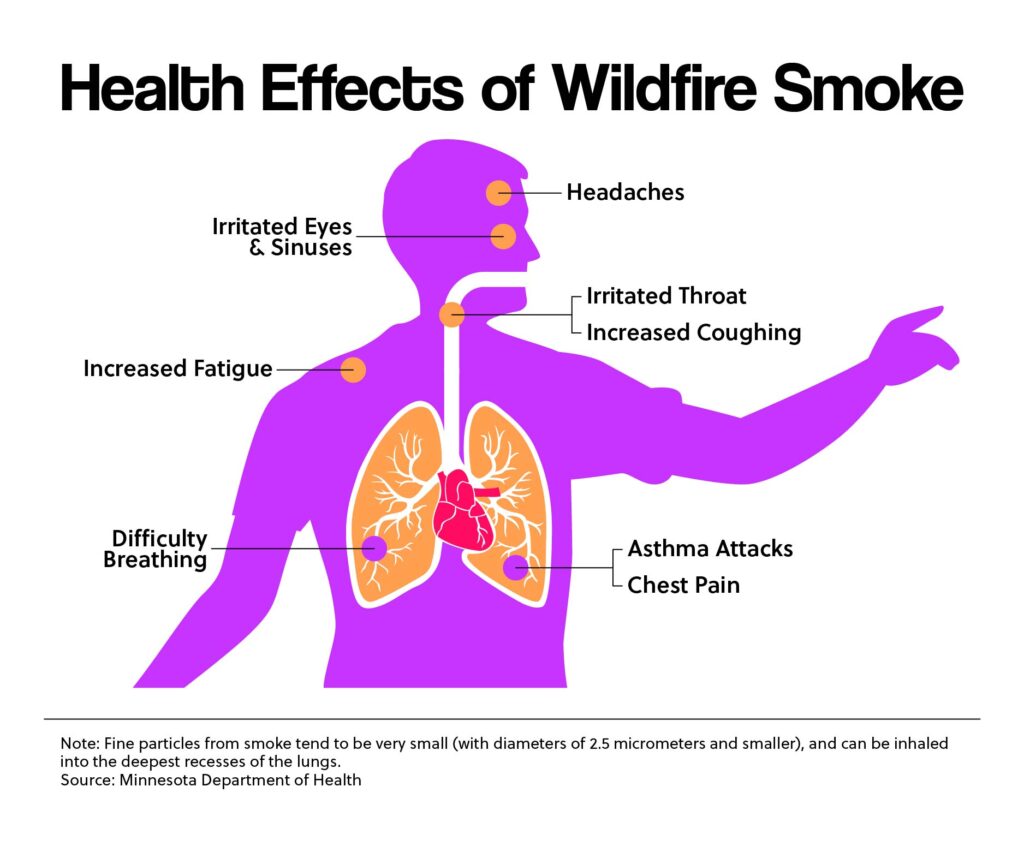
The clear danger of the flames themselves is one hazard of the deadly wildfires in Southern California. But they've sparked a second severe health hazard, too. That second hazard is smoke. Air quality in the sprawling region with over 18 million people has plunged as smoke from a handful of wildfires wafts across the region.
The Air Quality Index (AQI) is a scale that measures how bad air pollution gets. The AQI is set based on tracking pollutants like carbon monoxide, ground-level ozone, sulfur dioxide, and nitrogen dioxide in the air. The index ranges between 0 and 500. An index between 201 to 300 is labeled very unhealthy. An index between 301 to 500 is labeled hazardous.
Since the wildfires broke out last week, the AQI in parts of the LA region has, at times, topped 500. Scientists call certain risky tiny particles PM 2.5 matter. And they're being carried by winds throughout the region.
These smaller bits can travel down your throat and into your lungs. That's where they can then cause many types of health problems, Jessica Gilman told NPR. Gilman's a chemist for the National Oceanic and Atmospheric Administration.
PM 2.5 matter can irritate the throat, airways, and lungs. It can do so even in people with healthy lungs. But for people with lung issues, such as asthma or chronic lung disease, breathing in such poor air quality can create severe health problems. Even being exposed to an AQI of just 100 to 200 for any length of time can have the impact of smoking a pack of cigarettes.
Experts advise nearly all people in the LA region to wear an N95 or P100 mask when going outside. Keeping windows and doors shut is also advised.
Reflect: What could you do to stay safe if the air quality was really bad?
News brought to you by 
Read More News Stories Today!