WC Cleanup: Win, Lose, or Draw, Japanese Fans Pick Up Stadium Trash After Matches
June 24, 2026

Thought Question: Describe a time when you did something to take care of a shared space. What motivated you to do it?
A sold-out World Cup match can generate up to 25 tons of garbage. After the Samurai Blue, Japan’s national soccer team, depart the field, win or lose, hundreds of their fans stay behind to clean up at least their contribution to the mess. The team, meanwhile, leaves their locker room spotless.
In Japan, fans cultivate an appreciation for seiketsu, or cleanliness. That, and a devotion to gomi hiroi, a virtue taught to Japanese children at a very young age to be responsible for shared spaces.
"It's a natural part of our culture," Miku Takeya, 41, told Reuters. "We do this to ensure that everything we use is left clean so that the next person can use it comfortably."
Before the team’s Saturday contest against Tunisia at Estadio BBVA in Monterrey, Mexico, which Japan won 4-0, Nuevo León Governor Samuel García had 20,000 trash bags given out to Samurai Blue fans, according to local news outlets.
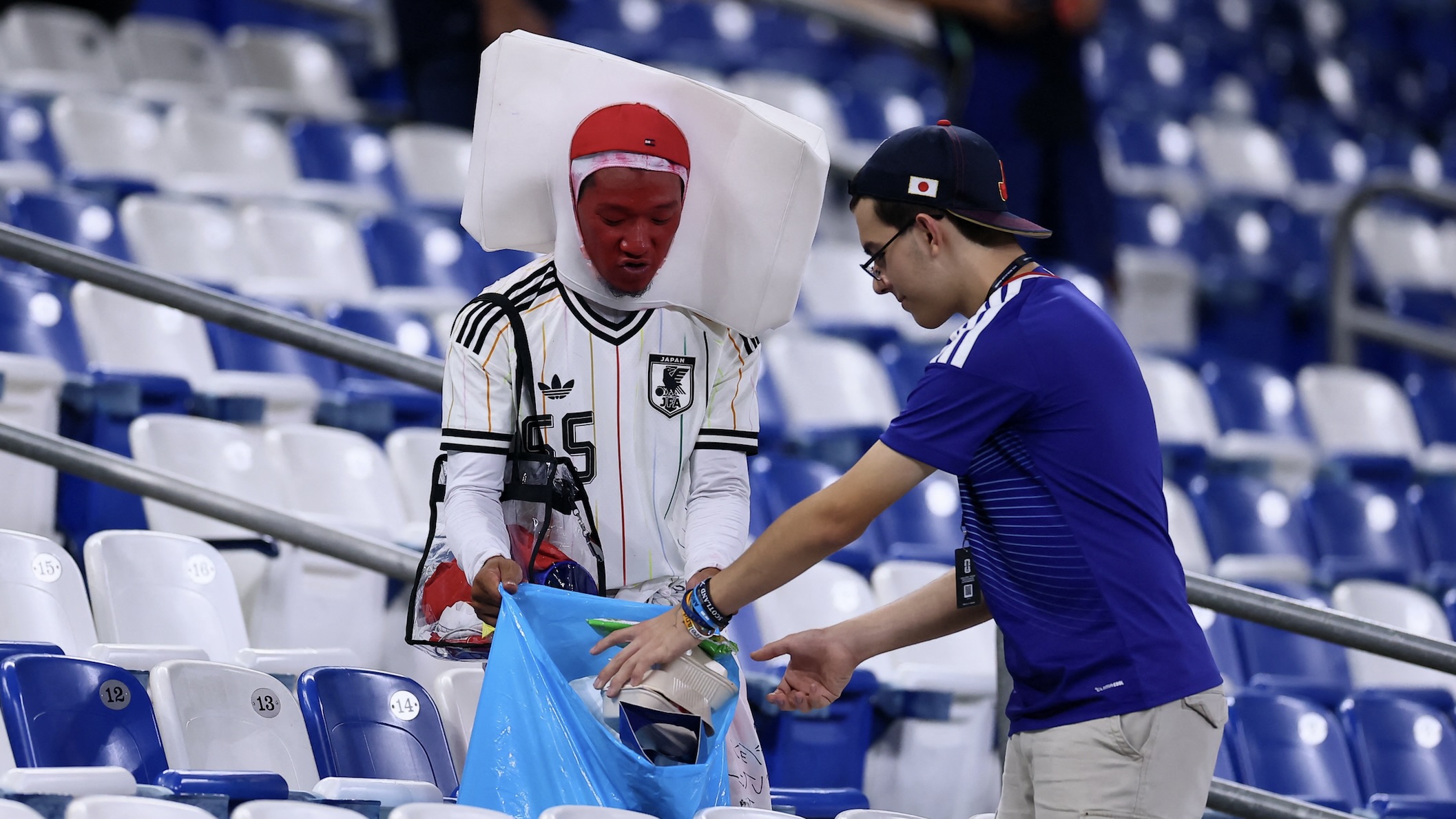
After the game, fans went from row to row picking up cups, sandwich wrappers, and napkins discarded across the section. They even wiped down the seats. Pictures and videos of their Boy Scout-like devotion to leaving the site better than they found it have gone viral.
The Japanese team, meanwhile, exited their locker room having rendered the facility spotless, and leaving stacks of neatly folded towels. Sometimes, the players leave thank you notes and origami cranes. This tradition has existed since 1998, when the team first made it to the World Cup.
The practice, however, has stirred a bit of backlash back home. Multiple studies have shown that Japanese men lag far behind their counterparts in other developed countries when it comes to doing housework. That's prompted many Japanese women to adopt the slogan, “Do it at home, too!”
Photo of Japan fans cleaning up trash in the stands after a match from Reuters.
News brought to you by 
Read More News Stories Today!