Trump 'Not Joking' About Third Term, Constitutional Scholars Say Not So Fast
April 1, 2025

President Trump has long talked about seeking a third term. The US Constitution doesn't allow it. Yet, Trump told NBC News on Sunday that he’s “not joking.” Trump also said that there are “methods” to achieve this.
Opponents say Trump’s third term goals go against US democracy. Constitutional scholars strongly reject the idea that Trump could legally pull it off.
“You’d have to have so many pieces fall into place for this even to (have a chance),” scholar Derek Muller told The New York Times. Muller teaches law at University of Notre Dame. Muller's also an election law expert.
The two-term limit is enshrined in the US Constitution. The 22nd Amendment in 1951 made it a law. Before this, it was just a tradition set by President George Washington. He chose not to seek a third term because he feared this could lead to tyranny. Congressional Republicans pushed through the amendment that made the unwritten rule law after the death of President Franklin Roosevelt. Roosevelt, a Democrat, was elected to four terms. He held office during an era of Depression and wartime.
How might Trump run again at age 82? A new amendment repealing the 22nd would have to be ratified. That's nearly impossible politically. It would need a two-thirds majority vote in both the US House and Senate. Then, it'd need a ratification by three-fourths of the state legislatures. There likely aren’t enough votes to clear any of those hurdles.
Trump third-term supporters have floated the idea of having Trump run as vice president. It'd be on a 2028 ticket headed by Vice President JD Vance. He could then take the top office if Vance resigns. The snag? Muller told the Times that the 12th Amendment forbids anyone constitutionally barred from seeking the presidency to run for vice president.
Reflect: Do you think there should be limits on how long a leader can stay in power? Explain.
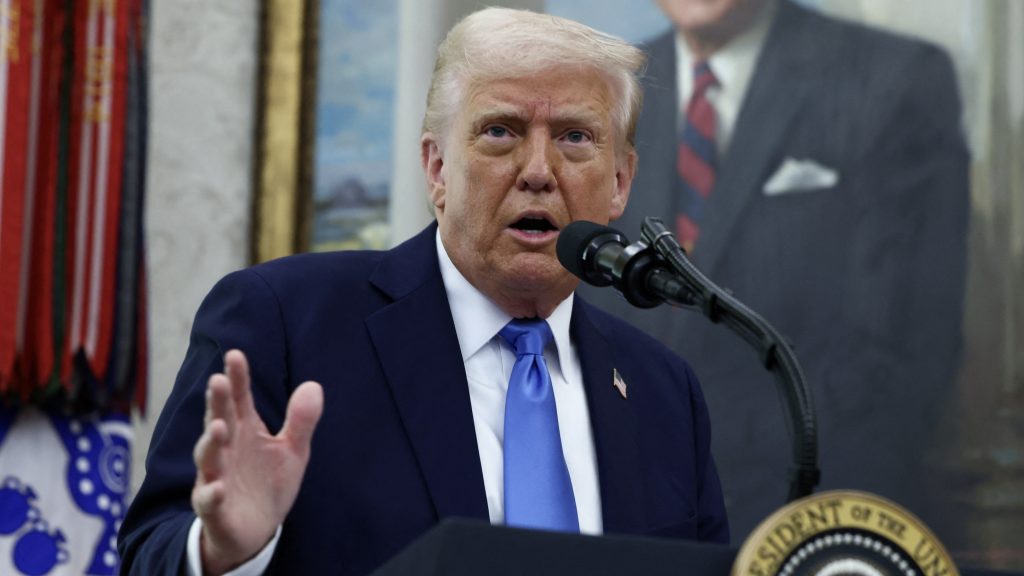
Photo of US President Donald Trump from Reuters.
News brought to you by 
Read More News Stories Today!