Tick Bites That Cause Meat And Milk Allergy Rising, Health Officials Warn
June 24, 2026

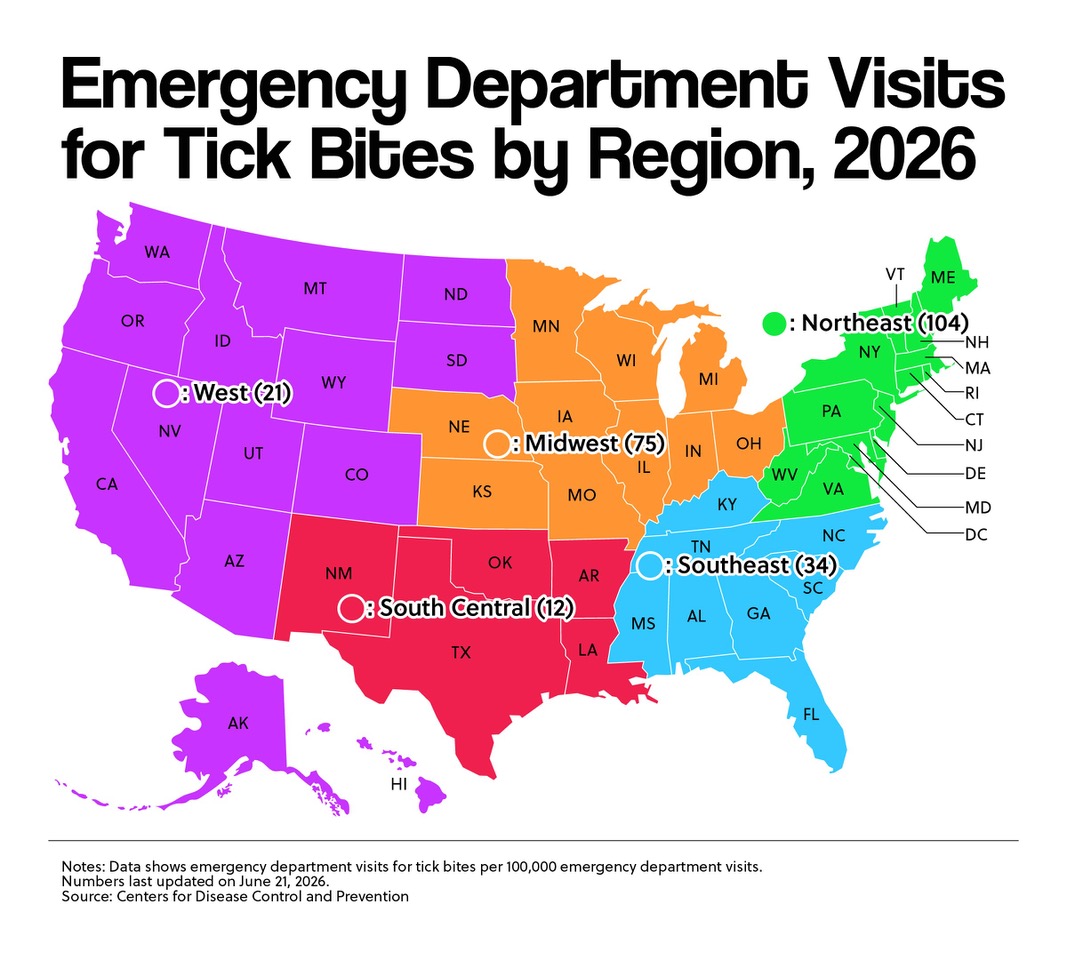
US health officials are warning about the dangers of tick bites. They have seen a spike in emergency room visits for bites from the tiny bug. One tick-borne illness can force human victims to give up most meat and dairy food products.
The disease is called alpha-gal syndrome. It's spread by the lone star tick. The bug stands out for the white dot on its shell. People with alpha-gal have allergic reactions to eating red meat and its byproducts. The allergy can make them very ill and can even be deadly.
Sufferers have to give up eating beef, pork, lamb, venison, and milk products. They must also manage the illness by taking antihistamines for mild cases. Epinephrine shots are needed to prevent anaphylaxis in more severe cases.
“When a tick feeds on a human, it actually spits salivary gland proteins when it is trying to sip the blood,” Saravanan Thangamani told WYDC-TV. He studies immunology at SUNY Upstate Medical University. "It takes about four to six hours after eating meat. In the worst case, they could go into anaphylactic shock." That, he noted, needs to be treated right away.
Most tick-borne infections are a virus or bacteria. Alpha-gal is neither of those. It is a sugar found in most mammals (but not humans). Once it enters the bloodstream, that sugar triggers an allergic reaction. No vaccine exists to treat it.
The US Centers for Disease Control and Prevention (CDC) estimates that nearly a half-million people in the US could have alpha-gal. And cases are rising. In April, a CDC report showed that ER visits for all tick bites were running 25% higher this year than in 2025. Massachusetts recently listed alpha-gal syndrome as a public health threat in the state. That suggests the range of the lone star tick may be spreading. It is found more often in the Southeast.
Health officials advise those spending time outside this summer to fully check themselves for ticks and remove them quickly.
Reflect: When you find out something affects your health or safety, how do you decide when to change your behavior or ignore it?
News brought to you by 
Read More News Stories Today!