Thousands of Dinosaur Tracks Discovered in Bolivia
January 8, 2026

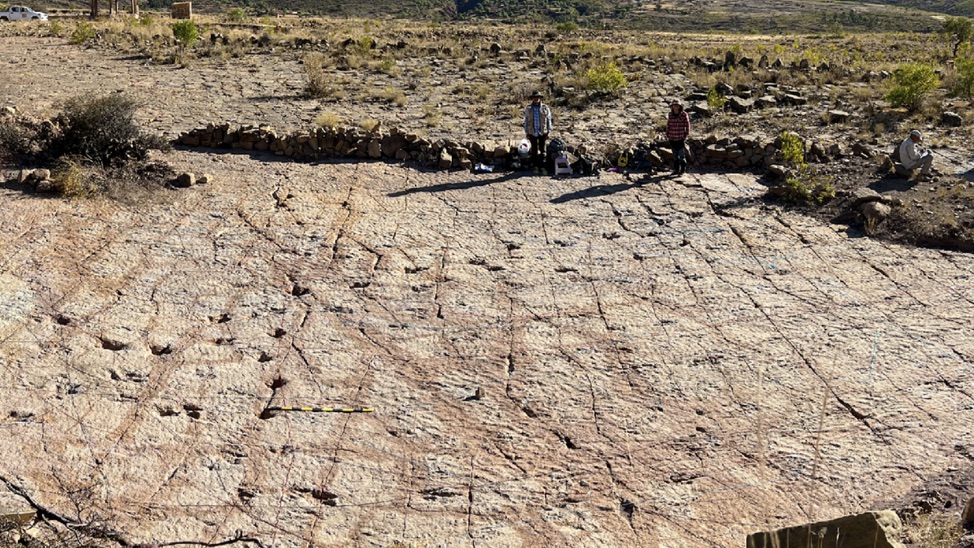
Cretaceous life was a highway. At least, it was for hundreds of dinosaurs moving up and down the coast of South America some 66 million to 145 million years ago.
 Paleontologists discovered a site in Bolivia that boasts nearly 18,000 dinosaur tracks. The site is in Torotoro National Park.
“The quality of preservation, the ... high number of tracks, and the diversity of behaviors recorded make the ... tracksite one of the premier dinosaur track sites in the world,” the team of researchers wrote in their findings. They were published recently in the journal PLOS One.
Most of the tracks were made by theropods. They walked on two legs. They left three-toed tracks. Most were carnivores. Allosaurs and tyrannosaurs were theropods. So were tiny compsognathus. The tracks found at the Carreras Pampa site are mostly at least a foot in length. That suggests that the dinos patrolling that 80,570-square-foot area were allosaurs or dilophosaurs.
The research team noted that the site likely breaks a number of records. They “includ(e) the greatest number of exposed dinosaur tracks (16,600), theropod tracks, tail traces, and swim tracks preserved in trackways,” the team wrote. They also found hundreds of markings suggesting that avian dinosaurs or birds frequented the area. They would land briefly in the mud to catch prey or to rest.
“These tracks and traces make the Carreras Pampa tracksite a (fossil) conservation (goldmine),” paleontologists wrote in the study.
Reflect: If you could study tracks or markings left behind by animals from the past, what would you hope they could tell you?
Photo of trackways with ripples on the surface of the layer courtesy of Esperante R, McLarty JA, Nick KE, Pompe LR, Biaggi RE, et al. (2025) Morphotypes, preservation, and taphonomy of dinosaur footprints, tail traces, and swim tracks in the largest tracksite in the world: Carreras Pampa (Upper Cretaceous), Torotoro National Park, Bolivia. PLOS ONE 20(12): e0335973.
News brought to you by 
Read More News Stories Today!