Future leaders, make your voice heard about the world you want to live in by filling out this 5-min survey!
January 28, 2026

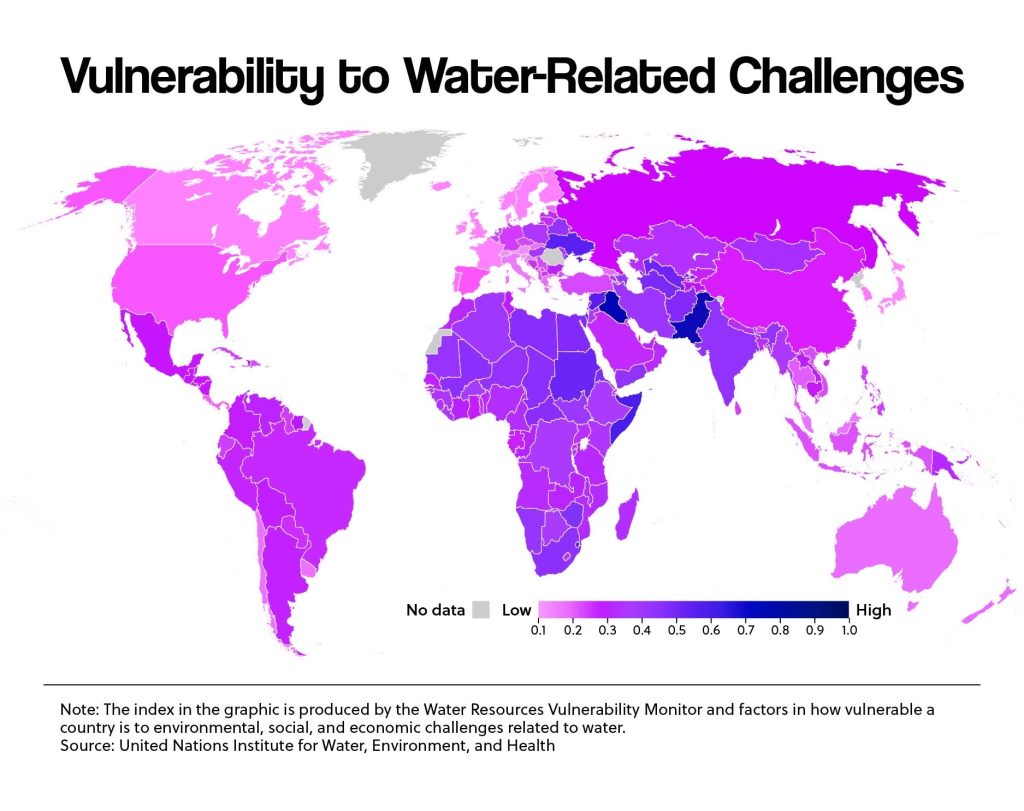
he world’s water crisis has grown so severe that a United Nations (UN) report has issued a warning. It found that a new era of “water bankruptcy” is upon us. Many regions with large numbers of people can no longer return to a normal state amid routine water shortages.
Roughly 4 billion people are now without enough water for at least one month per year, said the UN report. That's almost half of the people on Earth. Water systems across the planet are quickly drying up. These systems provide people in cities with daily fresh water and farmland with water for crops.
For instance, Kabul, Afghanistan, has nearly 5 million people. It could be the first modern city to run out of water. Meanwhile, Mexico City is sinking by roughly 20 inches each year. There's a sprawling aquifer beneath its streets. The water is being over-pumped from it. The US has issues too. The Colorado River is drying up. It feeds the Southwest. That’s caused Arizona and California to battle each summer over a low supply of water.
“Many natural water systems are no longer able to return to their (past levels),” Kaveh Madani, author of the UN report, wrote in The Conversation. The water systems are failing, the expert added.
Driving this issue is  climate change . It's causing whiplash weather systems of drought and severe storms. It’s also melting glaciers. And glaciers store water.
The lack of water in some regions is causing political and social tension. And this will only worsen. The search for water will become more frenzied, Madani wrote.
Many more people will feel the impacts of a low water supply, the author wrote. For instance, there will be more dry reservoirs, sinking cities, crop failures, water rationing, and frequent wildfires and dust storms in dry regions.
Reflect: How would your daily life change if clean water became harder to access?
News brought to you by 
Read More News Stories Today!