The History of Sleep May Be a Real No-Brainer
January 21, 2026

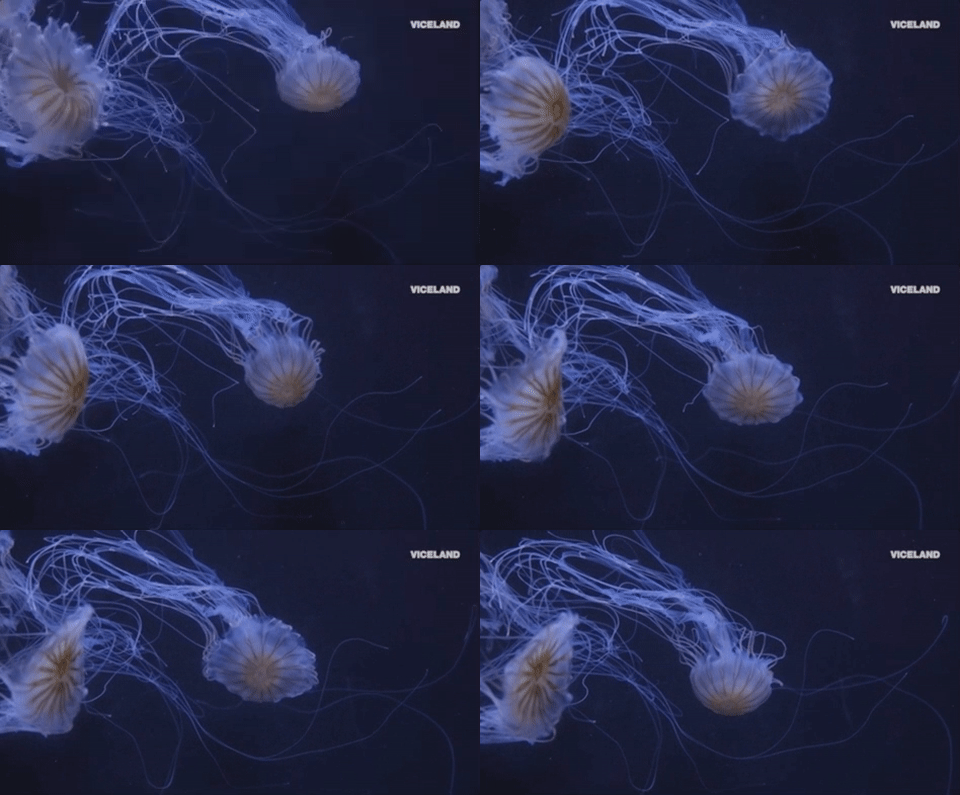
For humans and all other living things, sleep can be dangerous. It leaves us unaware of our surroundings. That makes us unable to respond to threats. So, scientists note, there must be a very good reason for animals to shut our bodies down for hours at a time. The answer, a new study shows, may be found in jellyfish.
Jellies have no brains. They do not appear to store memories or process feelings. Those are all things the human brain does during slumber. Yet jellies do sleep. That's according to a research team at Bar-Ilan University in Israel.
The team studied sleep patterns in two species of jellies. They studied the upside-down jellyfish Cassiopea andromeda and the starlet sea anemone Nematostella vectensis. Their findings were published this month in the journal Nature Communications. They found that both species were less active at night. Their cycle was very close to humans’ eight-hour sleep schedules.
During those jellyfish naps, the breakdown of DNA in their nerve cells slowed. That process left them refreshed. As a result, they could pulse through the water more quickly in search of food. If disturbed during the night, the jellies were less active the next day.
"These results demonstrate that DNA damage accumulates during wakefulness and decreases during sleep," the team told USA Today. They noted that the findings suggest a reason for sleep at the cellular level. It may have evolved that way before brains first developed.
In other words, we may have evolved to sleep because our brainless ancestors needed the rest.
Reflect: How do you notice your body or mind change when you don’t get enough rest?
Gif of jellyfish from Giphy.
News brought to you by 
Read More News Stories Today!