The Ecological Impact of Whale Pee
March 14, 2025

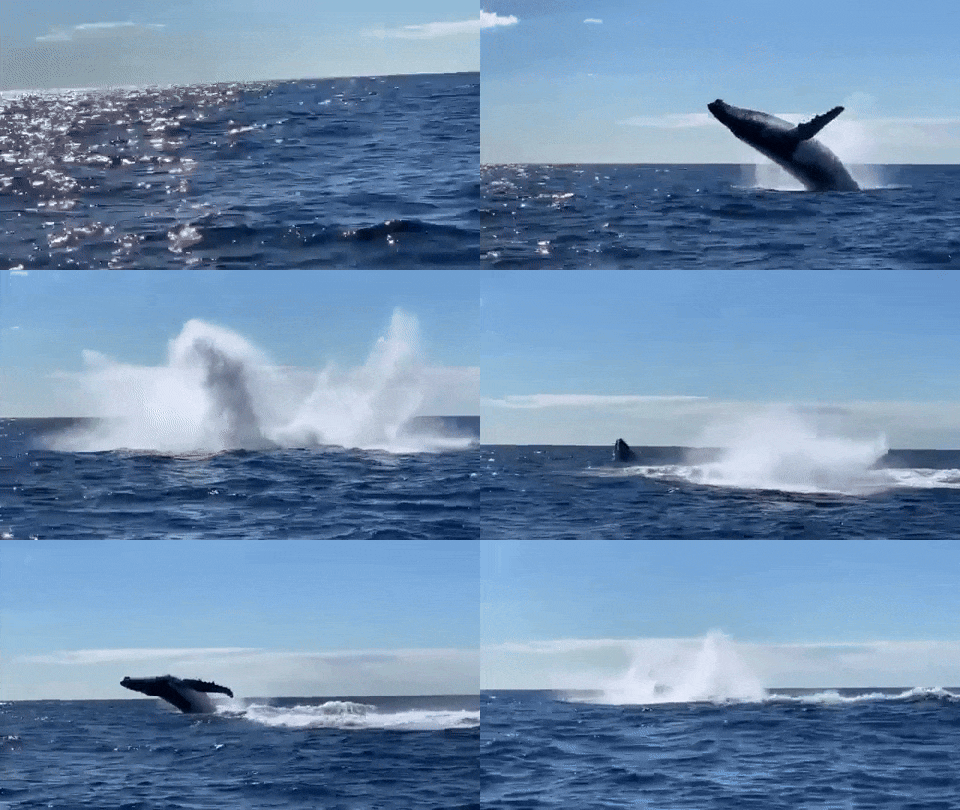
If tropical waters are so clear and free of minerals, where do the tiny organisms that sustain coastal ecosystems get their nutrients?
Whale pee.
That’s the conclusion of a paper published Monday in the journal Nature Communications. Researchers studied the journeys of large whales such as humpbacks, right whales, and grey whales. They weren't looking at where the mammals go, though. They wanted to see what the whales leave behind as they move.
In summer months, whales swim to the Arctic. There, they eat tiny organisms like plankton and krill. Some species can gain up to 30 pounds a day. The whales store that energy for the long journey south in the winter. As their bodies process the stored fat, it gets broken down into poop and pee. Both are chock-full of the nutrients tropical ocean habitats rely upon.
"We call it the 'great whale conveyor belt,'" biologist Joe Roman told Phys.org. He is a co-author of the study.
A large whale can urinate up to 250 gallons a day. Pods of the marine mammals are responsible for moving up to 4,000 tons of nitrogen from cold waters to warm each year, scientists say.
"Nutrients are coming in from outside — and not from a river, but by these migrating animals,” oceanographer Andrew Pershing said. “It's super-cool, and changes how we think about ecosystems in the ocean."
"We don't think of animals other than humans having an impact on a planetary scale, but the whales really do," Pershing added.
Reflect: Why might it be important to study how different creatures impact the world around them?
Gif of whales from GIPHY.
News brought to you by 
Read More News Stories Today!