
Texas Terrain, Massive Rainfall, Rendered 'Flash Flood Alley' Storm Fatal
July 8, 2025

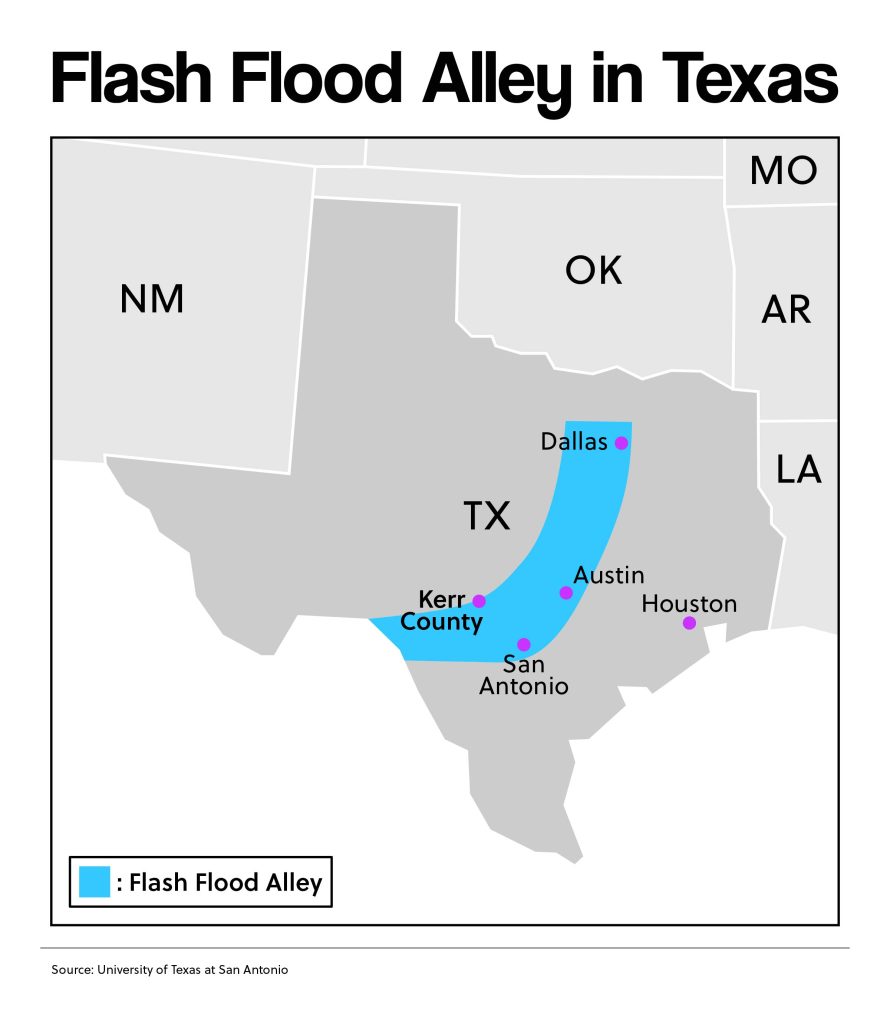
Flash floods swept through Central Texas over the weekend killing at least 82 people and leaving dozens more missing. The floods were the result of extreme weather and geographic features that make major floods in the region more likely.
Flash flood warnings remained in effect in the area Monday. Those warnings came as more than 1,000 workers continued search and rescue efforts. Leaders warned people to remain alert and avoid roads covered in water. Flash floods occur when rainstorms strike so hard and fast that the ground can’t absorb the water.
The area between Dallas to San Antonio is known as “Flash Flood Alley.” It is considered the most dangerous region for extreme flooding in the state. And Texas leads the nation in flood-related deaths. At least 1,069 people were killed in floods from 1959-2019, a University of Texas, San Antonio study found. That's nearly 500 more than second-place Louisiana.
The region's geography plays a role in the flooding. The hilly terrain features shallow river valleys with drought-stricken soil and limestone. That means the ground does not absorb much water. The area also sits in a spot where drier, colder air from the north and warm, moist air from the Gulf, meet. When those air masses collide, they can form sudden “rain bomb” storms. During those storms, the area’s rivers and creeks can rise much faster than people nearby can get to higher ground.
“Water moves very fast in the creeks, and flooding will happen very quickly,” Hatim Sharif told The Wall Street Journal (WSJ). He's a professor at the University of Texas, San Antonio and an expert in flooding. “In 90 minutes, you can have 20 feet of water.”
Climate change is also having an impact, experts say. Since 1985, warming oceans have led to a 15% increase in yearly rainfall in the southeastern US, John Nielsen-Gammon told the WSJ. He's a Texas A&M University climatologist.
Reflect: What can you do to support those who have experienced a devastating loss due to extreme weather events?
News brought to you by 
Read More News Stories Today!