
Sunken Soviet Nuclear Sub Near Norway Leaking Radiation, Study Finds
April 10, 2026

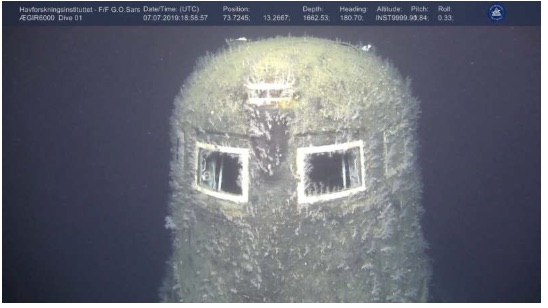
Among millions of shipwrecks lying at the bottom of the ocean floor, a handful of sunken nuclear submarines still pose dangers to marine and human life. A new study found that one of them, the Soviet-era Komsomolets, is leaking radiation into the Norwegian Sea.
The leaked radioactive elements include strontium, cesium, plutonium, and uranium. The good news is they quickly vanish farther away from the craft. And they do not pose a grave danger, monitors say.
The study authors wrote that the leaks have had no effect on the near or wider sea. But they stressed the need to keep watching the site. The study was done by Norwegian scientists. It was published in the journal PNAS.
The sub contains a nuclear reactor and warheads. It caught fire and sank in 1989. Forty-two crew members died. It is one of at least eight nuclear subs that either sank in the Arctic or North Atlantic oceans or were scuttled. The others include six Soviet subs, the K-8, K-27, and K-219. The Russian K-141 and K-159 are also among them. So are the American USS Thresher and USS Scorpion.
Two subs, the K-27 and K159, are slated to be raised from the ocean floor. But such a feat poses hefty hurdles. One is the danger that a release of radioactive substance from a raised sub could be more harmful.
Justin Gwynn is a Norwegian Radiation and Nuclear Safety Authority scientist. He told Gizmodo that radioactive leaks into the air while raising the sub could be worse. This "would likely have far greater and longer-term impact,” Gwynn warned.
Reflect: What would you consider when deciding whether to fix a problem now or leave it alone if both choices could have risks?
Photo of conning tower of the sunken nuclear submarine Komsomolets from Institute of Marine Research.
News brought to you by 
Read More News Stories Today!