
Study: Greenland Ice Sheet Melting Faster Than Previously Projected
February 12, 2025

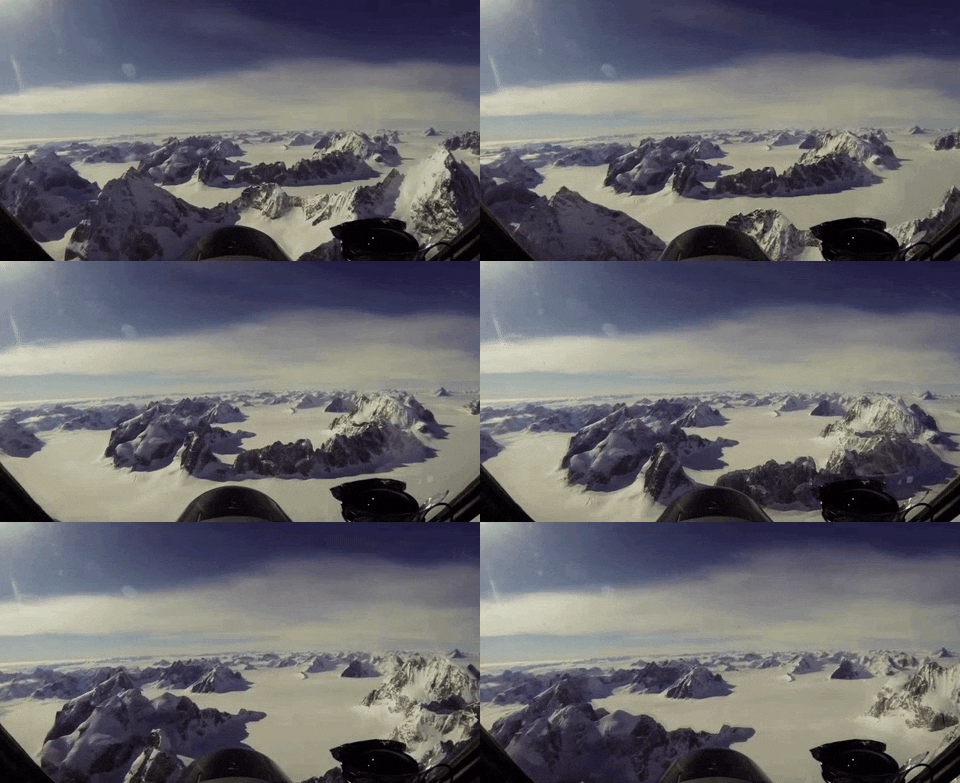
Scientists have found that Greenland’s ice sheet is melting faster than they thought. It's the world’s second-largest cluster of ice.
The study published in the journal Nature Geoscience focused on crevasses in Greenland’s ice sheets. Crevasses are the wedge-shaped gaps that open up in glaciers as temps rise. The study found that they had greatly increased in depth and size over a five-year span.
“The biggest thing I was surprised about was how fast this was happening.” Thomas Chudley told The Guardian. He's the lead author of the study. Chudley is a Durham University professor.
The research team relied on 8,000 3D surface maps created from satellite photos. They examined cracks in the Greenland ice sheet from 2016-2021. They found that at the borders between the ice sheet and the ocean the speed of glacier flow was tied to the growing crevasses. That's likely speeding up the breakaway of icebergs into the ocean.
"These processes can in turn speed up ice flow," study co-author Ian Howat told Durham University’s press office. Howat is an Ohio State University climate expert. He added that deeper crevasses could lead to "a domino effect that could drive the loss of ice from Greenland at a faster pace."
Experts say the melting of Greenland’s ice sheet could cause a one-meter rise in  sea level by 2100. That could put 13,000 square miles of land underwater. Low-lying coastal cities around the world would be in danger.
Chudley told Inside Climate News that studying crevasses will be key to understanding how ice melt will evolve in the future.
Reflect: How might rising sea levels affect the places where people live?
Gif of Greenland from GIPHY.
News brought to you by 
Read More News Stories Today!