South Africa's 'Living Rocks' Chow Down on Carbon
February 4, 2026

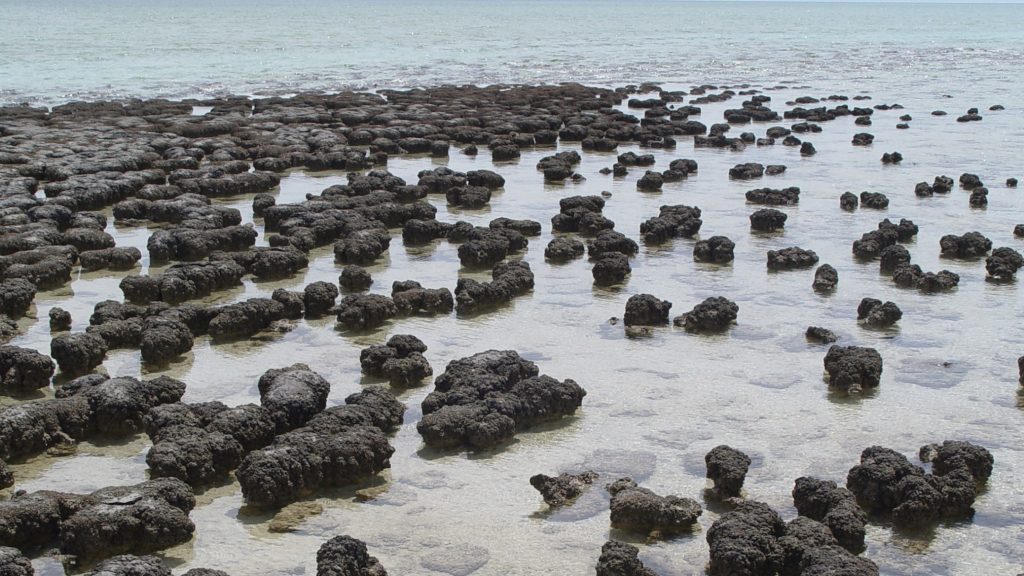
As fans of Sesame Street learned in the 1980s, “A rock’s not alive (no no no no no!).” Had the writers behind the Muppets’ song known about South Africa’s microbialites, however, they may have changed their tune.
Microbialites are the subject of a new  study . It was published recently in the journal Nature Communications. They are, for all intents and purposes, rocks. They’re rigid and craggy. They are made of dense deposits of the mineral calcium carbonate. The stony structures are created by billions of tiny organisms. They are called microbes. They still live in the microbialites. In essence, they’re “living rocks.”
"These ancient formations that the textbooks say are nearly extinct are alive and, in some cases, thriving in places you would not expect," Rachel Sipler told Phys.org. Sipler is a microbiologist. She is the study's lead author.
Sipler’s team studied patches of microbialites in South Africa over several years. They found the microbes could absorb massive amounts of carbon. The tiny organisms quickly used the carbon to build rocky structures. They could do so even under harsh conditions. In one year, a single tennis court-sized microbialite could absorb as much carbon dioxide (CO₂) as three acres of forest. CO₂ is a greenhouse gas. It contributes to climate change. The most surprising part of the tiny creatures' process? The microbes didn’t need sunlight to work. Most organisms that absorb CO₂ do.
"We're so trained to look for the expected,” Sipler told Phys.org. “If we're not careful, we'll train ourselves to not see the unique characteristics that lead to true discovery."
Reflect: When has learning something new changed how you understand the natural world?
Photo of microbialites from Wikimedia Commons.
News brought to you by 
Read More News Stories Today!