'Sinkholes," Unexpected Ground Collapses, Inflict Costly Damage, Sometimes Deaths
January 17, 2025

In Westmoreland County, Pennsylvania, a missing 64-year-old woman who went looking for her cat was found dead last month in an abandoned mine. She fell into it through a thin layer of ground under her feet, police officials say.
The sudden appearance of “sinkholes,” as these phenomena are called, are fairly common. But deaths from sinkholes are not. Sinkholes occur above underground voids. That includes things such as a cavern or mine. They can also appear where water beneath the surface erodes the bedrock. Or they can even appear amid crumbling infrastructure such as decaying water mains.
Hurricanes have been known to leave sinkholes in their wake. They can vary in width from a couple of feet to hundreds of acres. Large sinkholes can collapse entire roads. They can also sink cars, or even swallow up houses.
“It is a frightening thought to imagine the ground below your feet or house suddenly collapsing,” the US Geological Survey (USGS) stated in a report. “When they strike, tragedy can occur.”
Such tragedies include the 2019 deaths of two Russian men who drove into a sinkhole in the city of Penza. And in 2022, an Israeli man died in the void left in a collapsed swimming pool floor in Karmej Yosef.
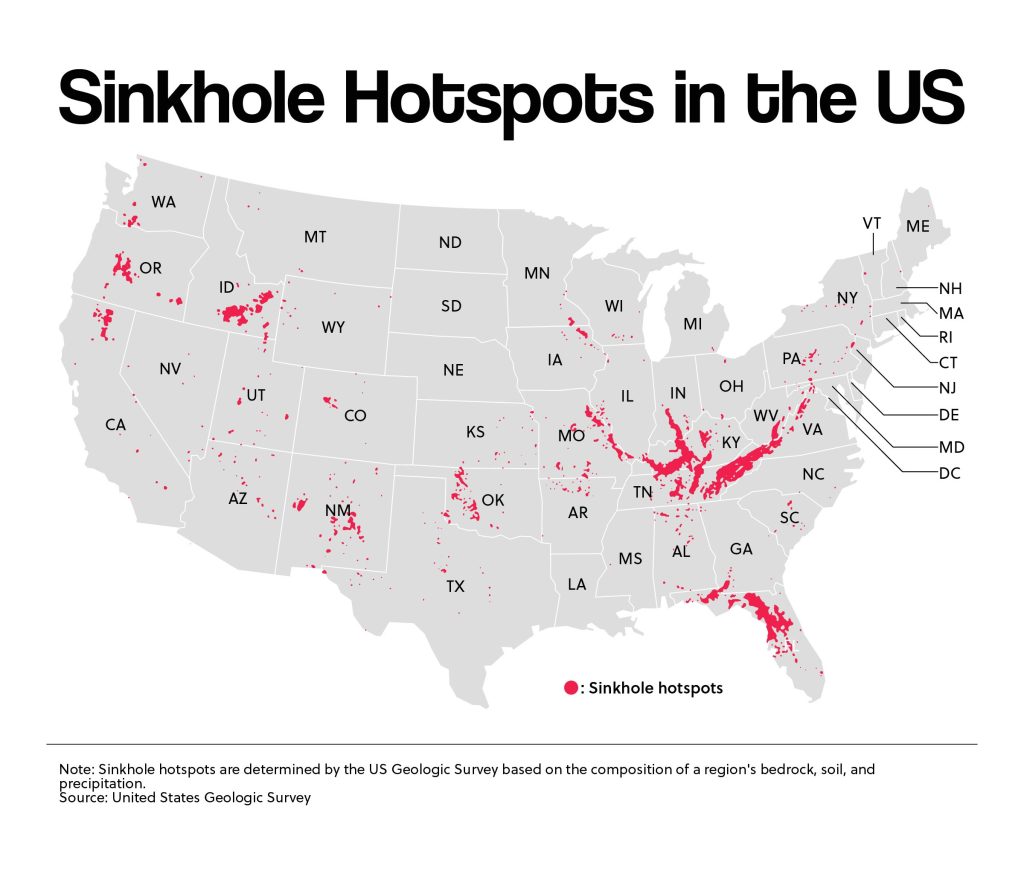
Deaths from sinkholes are very rare. But they can cause as much as $300 million in damage every year. That's according to the USGS. Natural sinkholes threaten roughly 20% of the US. They are most common in Alabama, Florida, Kentucky, Missouri, Pennsylvania, Tennessee, and Texas. That's due to those states resting on a bedrock that can easily be dissolved by groundwater.
Reflect: What are some ways communities can work together to prevent unexpected natural disasters?
News brought to you by 
Read More News Stories Today!