Report: US Wildfire Pollution Causes 24,100 Deaths Per Year
February 9, 2026

A study published this month in the journal Science Advances concludes that thousands of Americans, many more than was once thought, die each year as a result of exposure to  wildfire smoke.
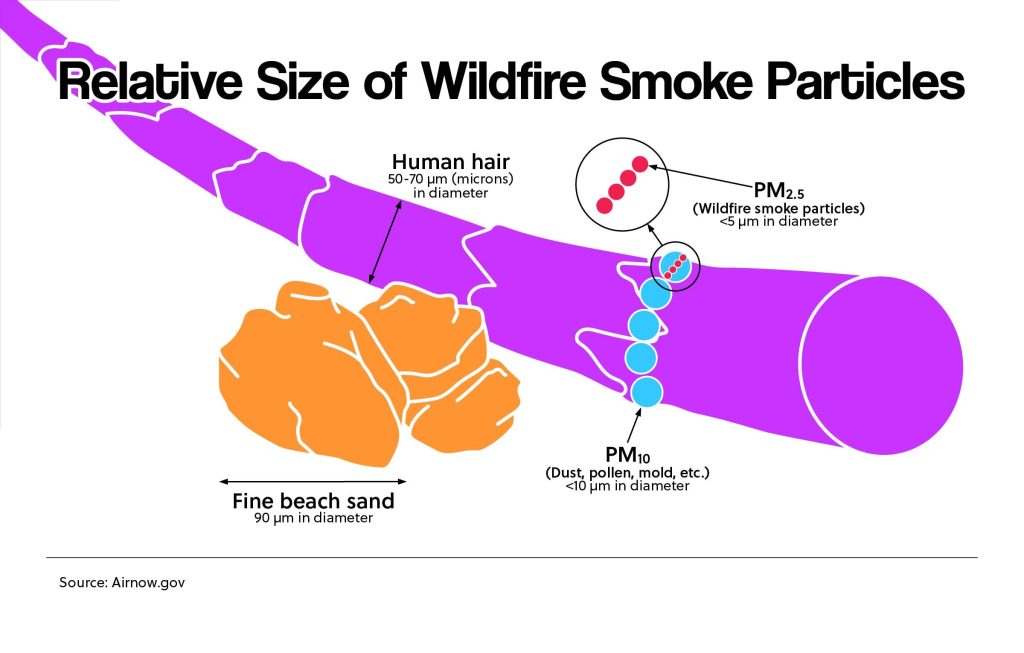
Researchers examined mortality statistics from 2006-2020 in 3,068 counties across the US. They focused on regions exposed to smoke containing particles measuring PM2.5 or smaller (less than one-tenth the diameter of a human hair). Such particles, if inhaled, can pass through the lungs and into the bloodstream. They have been linked to a host of health issues, including asthma, severe headaches, heart attacks, and even cognitive decline. Over time, damage to the lungs or heart can be fatal.
The study found that annual human deaths from wildfire smoke-related causes rose by 5,594 for every 0.1 microgram increase in PM2.5 particles per cubic meter of air. The overall average across the US during the time period of the study was 24,100 deaths annually. Because these fatalities can occur weeks or even months after a wildfire event, they represent a hidden cost of such natural disasters, scientists say.
The study’s authors linked an increase in severe wildfires like those that decimated the Palisades area of California in 2025 to climate change. They argued that the Trump administration’s recent deep cuts to climate change research and the Environmental Protection Agency put US lives at greater risk of wildfires and wildfire smoke.
“Despite the increasing wildfires driven by the rapidly changing climate,” the study concluded, “the shift in US climate policy starting in 2025 is halting federal climate action and jeopardizing global mitigation efforts, posing a critical and underappreciated risk to climate progress.”
Reflect: What are some choices you would make to protect your own health if you knew the environment around you could be harmful?
News brought to you by 
Read More News Stories Today!