Paleontologists Dig Through Old Photos to Discover New Dinosaur
January 31, 2025

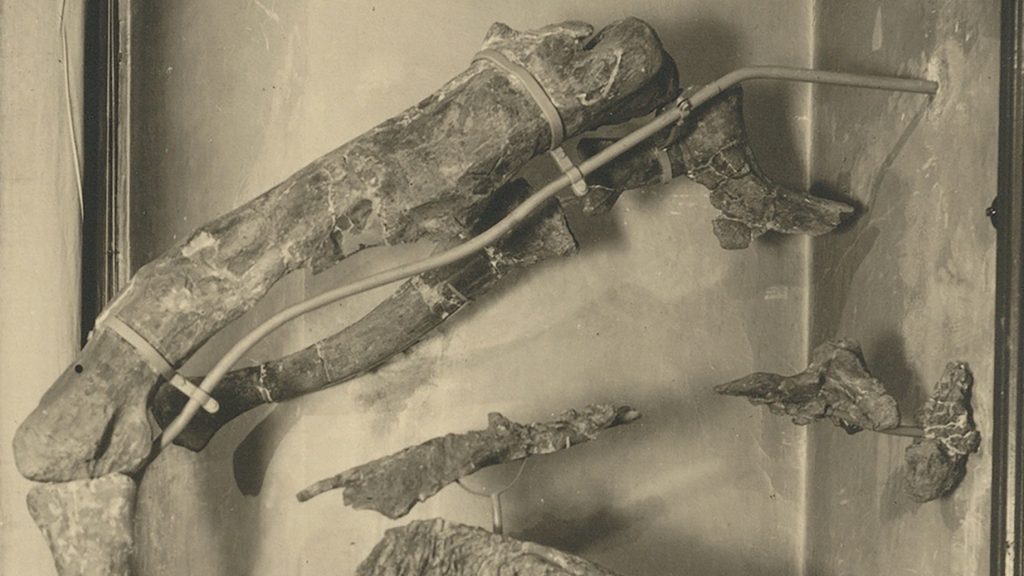
Our understanding of even the most ancient of Earth’s life forms is constantly evolving. Sometimes, it does so in unexpected ways. Take one of the newest species of dinosaur. It wasn't found at a dig site, or in a quarry. It was discovered in photographs saved from World War II.
The pictures have their own history. They were taken in 1914. They show dinosaur bones found in Egypt. The scientist who took them was studying fossils in a museum in Munich. He knew the remains were of a massive predator. He thought it belonged to the genus Carcharodontosaurus. That means “shark-toothed lizard”.
Once identified, the bones remained in Munich. The photos eventually made their way to the University of Tübingen. There they’ve sat, even as the actual bones were destroyed by Allied bombing at the height of World War II. Now, 80 years later, scientists are taking a second look. They're not so sure it's that sharky dino.
“What we saw in the historical images surprised us all,” Maximilian Kellermann said in a news release. He is a paleontologist . “The Egyptian dinosaur fossil ... differs significantly from more recent ... finds in Morocco. (The) original classification was thus incorrect. We identified a completely different, previously unknown predatory dinosaur species here and named it Tameryraptor markgrafi.”
The new dinosaur gets its name from the ancient word for Egypt (“Tamery”) and the man (Richard Markgraf) who first discovered the bones. The carnivore would have been 10 meters (32.8 feet) long. It had sharp teeth and a “prominent nasal horn,” researchers say.
Reflect: Why might scientists re-examine past discoveries?
Photo of Tameryraptor markgrafi fossils courtesy Maximilian Kellermann, Elena Cuesta, and Oliver W. M. Rauhut in the journal PLOS One.
News brought to you by 
Read More News Stories Today!