Origami Shelter Secures Science Prize for 14-Year-Old Foldsmith
February 24, 2026

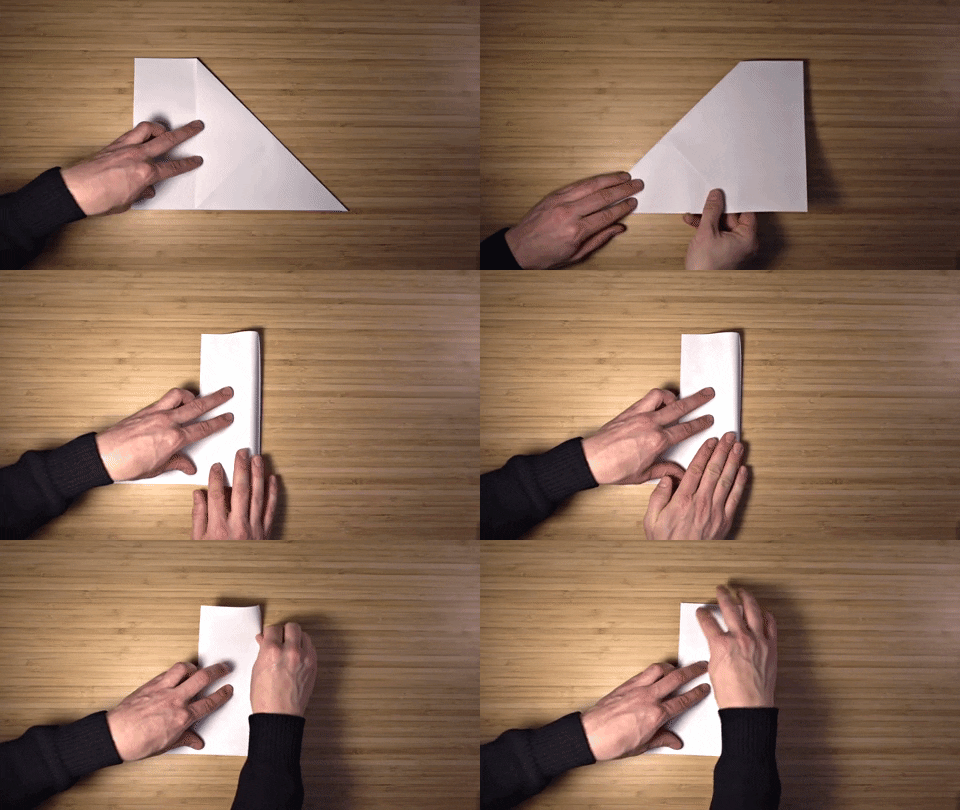
Miles Wu of New York City has been obsessed with origami for most of his life. For the 14-year-old, that has mostly meant folding paper into cranes, hats, and other designs. But last year, he watched footage of natural disasters like the Palisades fires and Hurricane Helene. He started to wonder if his talent might help people.
Origami patterns are strong. They're also collapsible. So Miles thought perhaps they could be used as emergency shelters during natural disasters. "Kind of like a tent,” Miles told Smithsonian Magazine.
Miles experimented with a type of origami fold known as a Miuri-ora pattern. It's named after Japanese astrophysicist Koryo Miuri. The design allows a large sheet of paper to be transformed “into a really flat, compact shape,” Miles said. He added that the shape is "really cool."
To apply the Miuri-ora pattern to something that could help during a disaster meant Miles had to think about a number of factors. Short-term shelters need to be quickly produced, Miles explained. They need to be easy to set up. And they have to withstand the elements. To find the right fold, Miles ran 108 trials. He tried out 54 fold types. Each required a sheet of paper, 64 square inches in size, to be folded between guardrails spaced only 5 inches apart. In each trial, Miles stacked weight on top of the origami structure until it collapsed.
To his surprise, the strongest structure was able to hold more than 10,000 times its own weight. “To put it in other words, this ratio is the equivalent of a New York City taxicab supporting the weight of over 4,000 elephants!” Miles told Smithsonian.
For his origami emergency tent design, Miles won the 2025 $25,000 Thermo Fisher Scientific Junior Innovators Challenge.
Thought Question: What would inspire you to turn your talent into something that makes a difference?
Gif of folding origami from Giphy.
News brought to you by 
Read More News Stories Today!