Orcas Use Tools, New Footage Shows
June 26, 2025

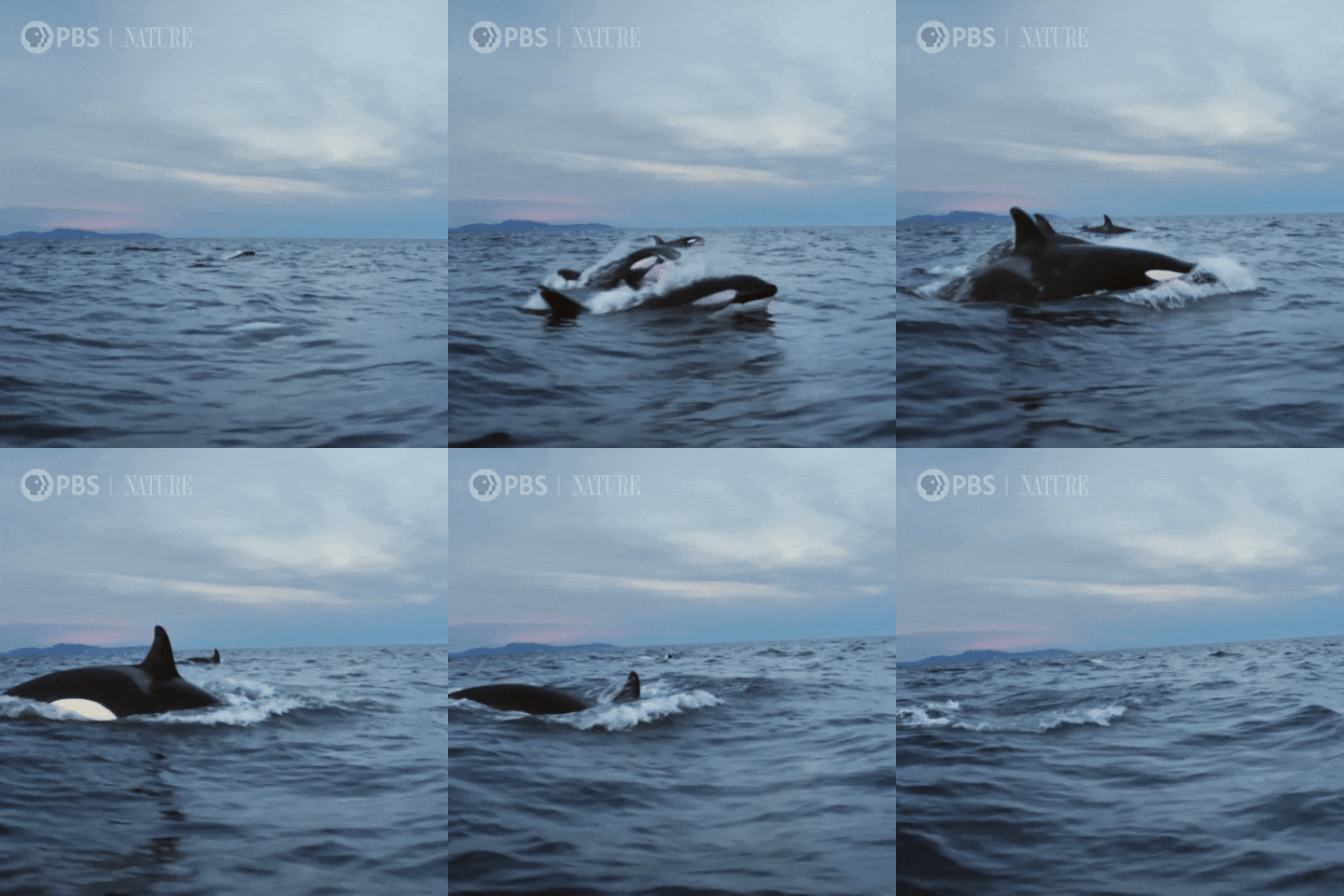
The list of species that use tools is a small one. Humans do it, of course. So do chimpanzees and other primates. Crows and otters use rocks to bash open snails and clams. Elephants use branches to swat flies.
It’s time to welcome orcas to the list.
Biologists at Washington state’s Center for Whale Research studied a pod of orcas in the Salish Sea. They filmed 30 examples of a behavior they dubbed “allokelping.” The team published its research Monday. It's in the journal Current Biology.
“We observed whales fashioning short lengths of bull kelp stipe from complete stalks, positioning the stipe between themselves and a partner, and then rolling the kelp along their bodies,” the researchers wrote in the study.
The team thinks that the orcas are using the springy seaweed to groom each other. Orca skin is sensitive. It is prone to scaly buildups. But a good kelp rub may help remove some of that scale. Biologists noted that older orcas with scalier skin were more likely to allokelp.
Orcas, or killer whales, are very social animals. So they may also be using the tools to build bonds.
“The main function of grooming is to help build and maintain social relationships,” study co-author Michael Weiss told Scientific American.
In the pod, allokelping was often observed between related orcas. Grandmothers shared kelp with their grandsons. And Tsuchi, a 29-year-old orca, repeatedly kelp-groomed Tofino, her 5-year-old daughter. The behavior suggests that orcas might be able to use tools in different ways, too.
“It tells me there’s a lot more stuff like this out there to be found — in killer whales and in other cetaceans,” Weiss says.
Reflect: If you could discover a new way that animals use tools, what would you hope to find?
News brought to you by 
Read More News Stories Today!