
New Species of Massive Manta Ray Identified in Atlantic Ocean
August 15, 2025

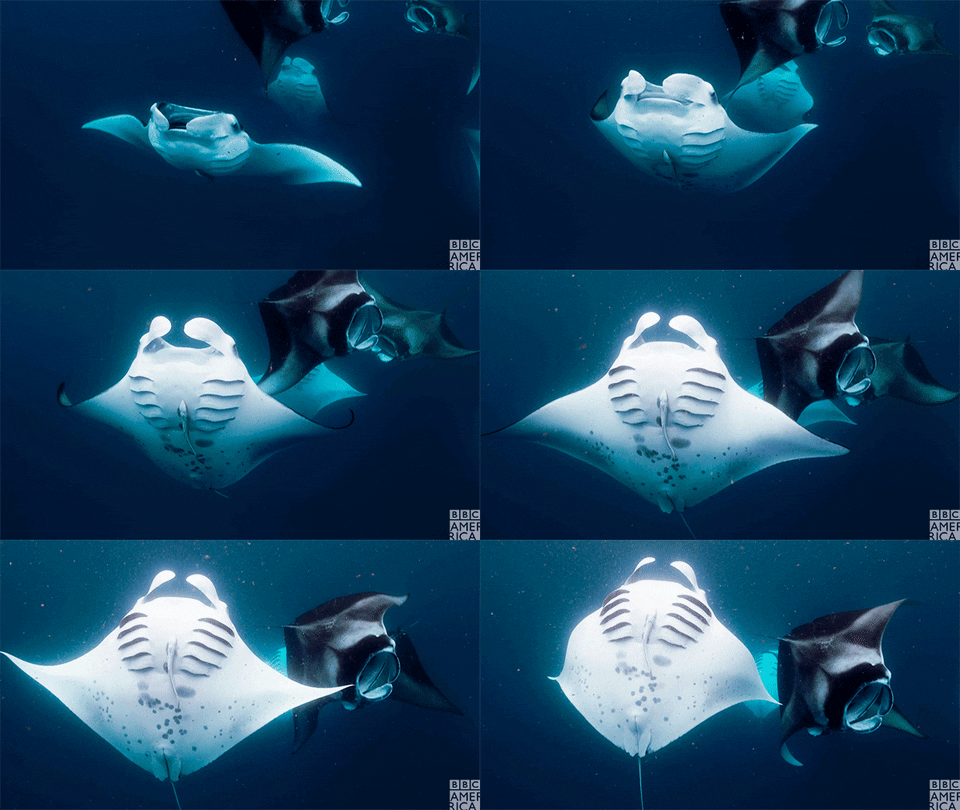
Marine biologists often find new, tiny species lurking in coral reefs or on the ocean floor. It’s far less common to find a new species with a 15- to 20-foot wingspan. That’s what makes the identification of Mobula yarae, or the Atlantic manta ray, such a rare event.
Manta expert Andrea Marshall noted on Instagram that people were shocked when scientists learned there were two species of manta rays. Now she was claiming there were three. "I was not sure if anyone would believe me," she posted.
Marshall first took note of the new species 15 years ago off the Eastern coast of Mexico. But she couldn’t be certain the ray she observed was truly distinct from the other two species of manta ray. Those species are the giant oceanic manta and the reef manta. Marshall still could not find proof until 2017. That's when she received reports of a ray that had washed up on the beach in Florida. It looked a lot like the creature she had written about in 2010.
DNA testing confirmed that the manta was genetically different from the other types of manta. Marshall named the new ray species after Yara. It is a mythological creature in Brazilian folklore. Her team detailed the find in an article published in the journal Environmental Biology of Fishes.
The Atlantic manta ray lives in the coastal waters of the Eastern US, Central America, and Brazil. It can reach widths of 16-20 feet. It features a black-and-white skin pattern that looks like the markings of a panda bear.
Reflect: What’s something mysterious or unknown in the world that you wish you could explore or discover?
Gif of a manta ray from GIPHY.
News brought to you by 
Read More News Stories Today!