
Meteorological Models Suggest El Niño Could Make A Comeback This Year
March 11, 2026

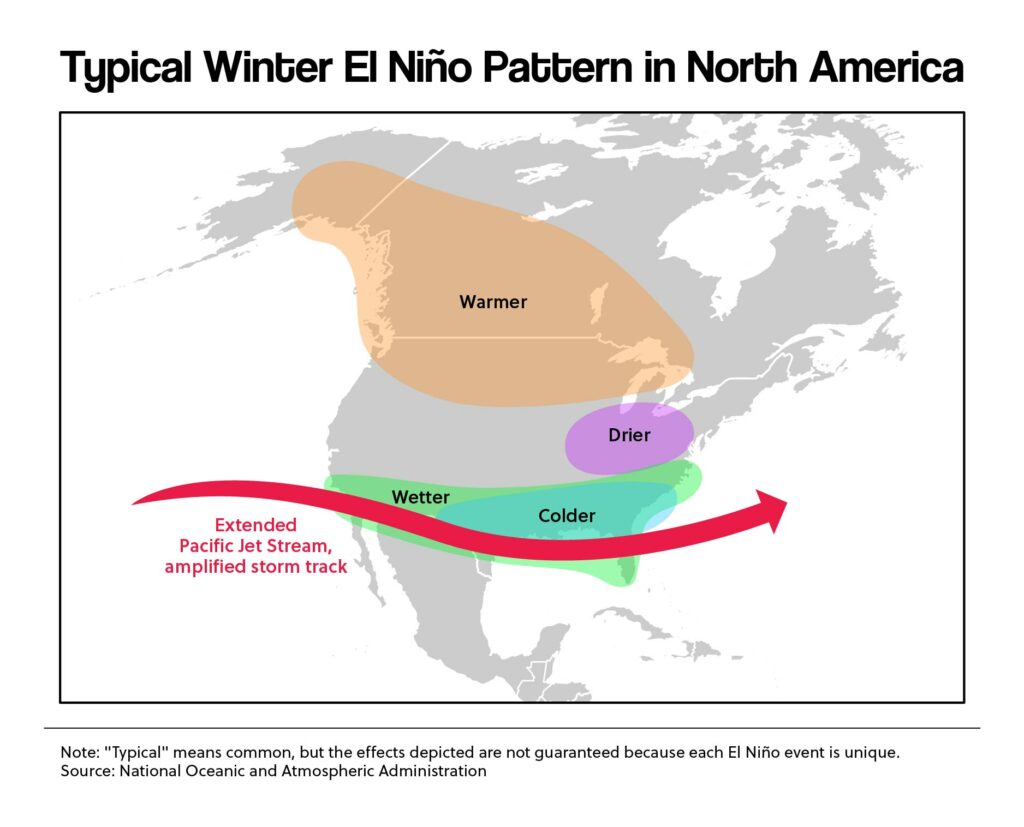
Weather and climate-tracking models project with rising confidence the possibility of El Niño, a Pacific Ocean warming pattern, returning this summer. Should it do so, global temperatures could see a spike.
The Pacific Ocean cycles through times of hotter and cooler water temperatures as currents that draw colder water from the Arctic and Antarctic fluctuate. When its waters enter the hottest part of the cycle, we begin an event known as El Niño. It translates to “the boy child.” It's so named because it was first observed by South American fishermen. They saw how warming waters changed their fish hauls around Christmas time. Hotter Pacific waters change the way air currents flow above the ocean. That, in turn, impacts global weather patterns.
El Niño occurs every two to seven years. It can push global temperatures up as hotter air blows across the globe. Some places will be more likely to see droughts and heat waves. Others will contend with stronger storms and higher rain totals. Those places may be on high alert this summer and into 2027. Some weather models show a “super El Niño” may occur.
“Whew," climate scientist Daniel Swain posted on X. Swain wrote that "all signs" are pointing to a major El Niño event.
Eric Webb is a Defense Department meteorologist. Webb told The Washington Post that climate change is at least partly to blame.
“Due to the increasing concentration of greenhouse gases, the climate system cannot effectively exhaust the heat released in a major El Niño event before the next El Niño comes along and pushes the baseline upward again,” he said.
Based on the US model, El Niño has a 50%-60% chance of being seen this summer. Many European models have been tracking slightly higher.
Reflect: How do changes in weather or climate affect your daily life?
News brought to you by 
Read More News Stories Today!