Massive Saharan Dust Cloud to Settle Over Southeast US
June 5, 2025

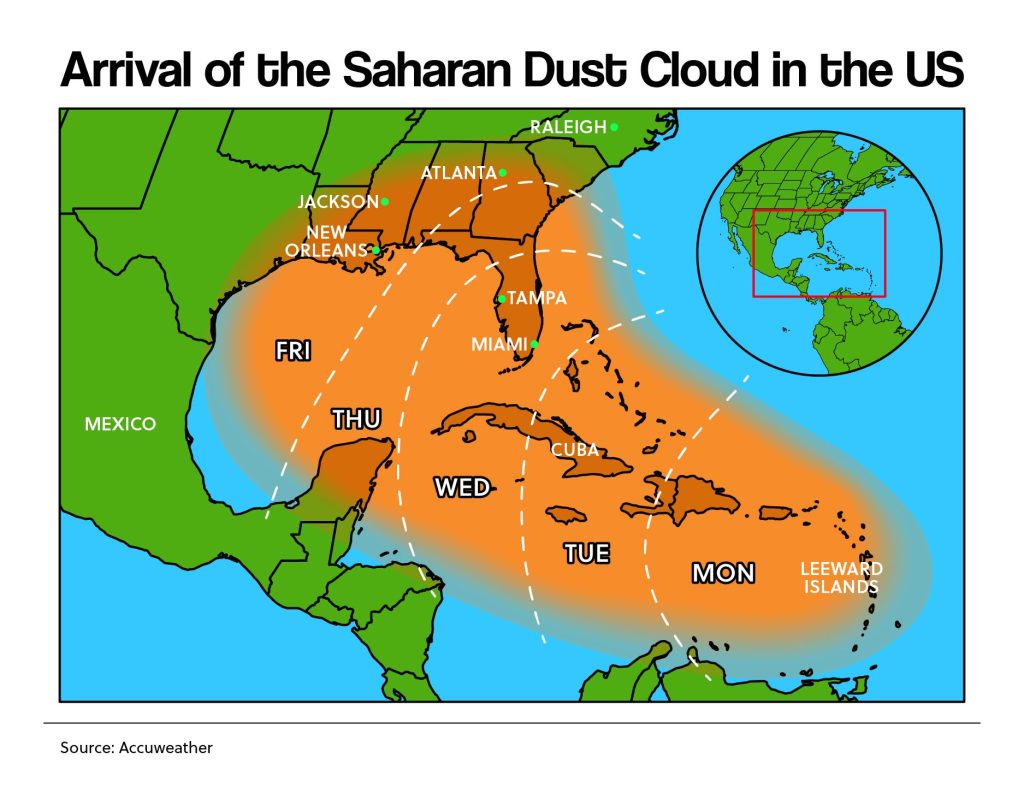
Most years, the plume of dust whipped up from Africa’s Sahara Desert and brought westward by spring winds breaks apart somewhere over the Atlantic Ocean. This year, though, the cloud is too big. It has managed to reach the Caribbean and the US, where it’s already impacting residents.
The cloud is known as the SAL, or Saharan Air Layer. It has settled over Jamaica, Barbados, and the Florida Keys. It is expected to drift north in the coming days. Experts expect the 2,000-mile-long plume will reach Louisiana, Alabama, and Mississippi by the weekend. It is not very dangerous. But it could make breathing trickier. It could also reduce visibility.
“The SAL will result in degraded air quality and hazy skies ...,” the National Weather Service said. “(It) will also contribute to warmer-than-normal temperatures." Nights will be particularly warm, the NWS explained. That is because the dust traps the heat of the day. People in the cloud are advised to wear a mask if they will be outside for a long time, especially if they have allergies or asthma.
There are some positives to the SAL, though. The winds that carry it can slow down tropical waves created by hurricanes. And all those bits of sand and grit in the atmosphere refract sunlight. Southerners can expect some vibrant sunrises and sunsets in upcoming weeks.
“It’s very impressive,” Alex DaSilva told The Associated Press. He is AccuWeather’s lead hurricane expert.
The last time the SAL reached the Caribbean was in 2020. It was so large that forecasters nicknamed it "Godzilla."
Reflect: What’s a time when nature surprised you or made you see something in a new way?
News brought to you by 
Read More News Stories Today!