
January Planetary Parade to Reach Apex This Week
January 22, 2025

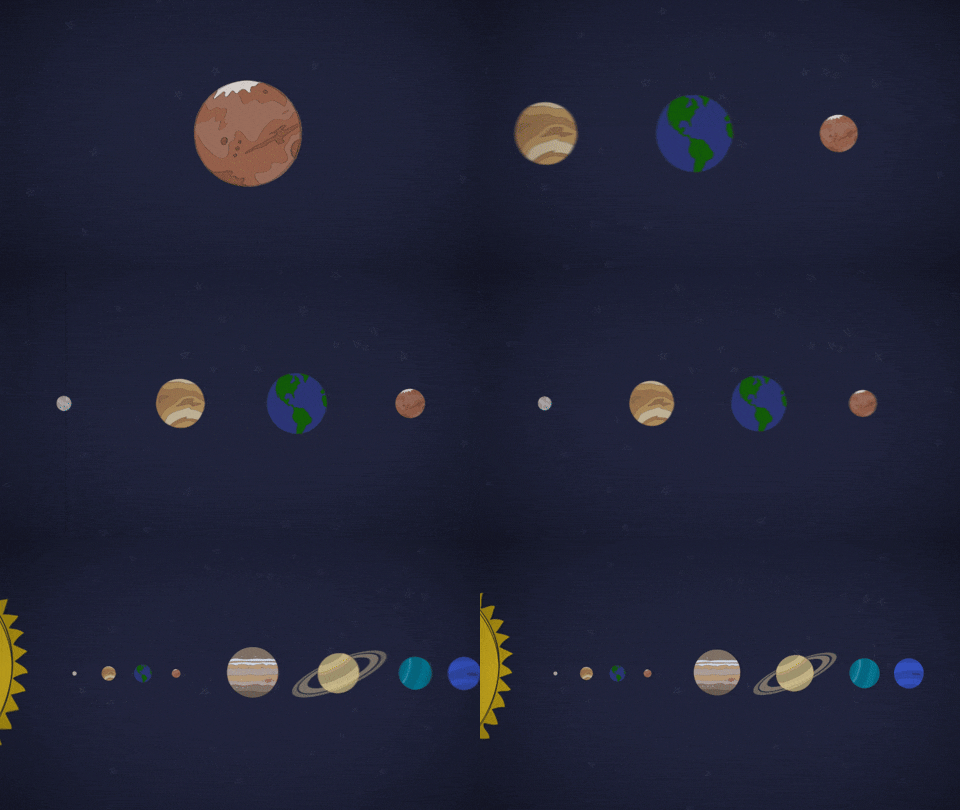
There are eight planets in our solar system. This week, six of them will be visible in the cloudless night sky ... or seven, if you count the ground beneath your feet.
“They’re not in a straight line, but they’re pretty close together on one side of the sun,” Hannah Sparkes told The Associated Press (AP). She works at the Bishop Museum of Science and Nature in Florida.
The planets that are aligned this month are Venus, Mars, Jupiter, Saturn, Uranus, and Neptune. The first four are visible to the naked eye. Uranus and Neptune may require a telescope or binoculars to pick out of the star-studded lineup.
Such a planetary parade can happen about once a year, astronomers say. In this case, two of the planets — Venus and Saturn — will appear to be less than two degrees apart on Friday and Saturday night. If a stargazer is turned to the south, Venus and Saturn will be in the southwestern sky. Jupiter will appear directly south. Mars will hang in the southeast.
Not to be left out of the fun, Mercury will join the mix at the end of February. Onlookers will be able to see all seven spheres at the same time, provided they’ve got the right equipment. Doing so is a sure way to get some planetary perspective, scientists say.
“It gives us a little bit better sense of our place in the solar system and the universe,” Buffalo State University astronomer Kevin Williams told the AP.
Reflect: How might learning about the positions and movements of planets change the way we see our place in the universe?
Gif of solar system from GIPHY.
News brought to you by 
Read More News Stories Today!