Jane Goodall, World-Renowned Primatologist, Dies at 91
October 3, 2025

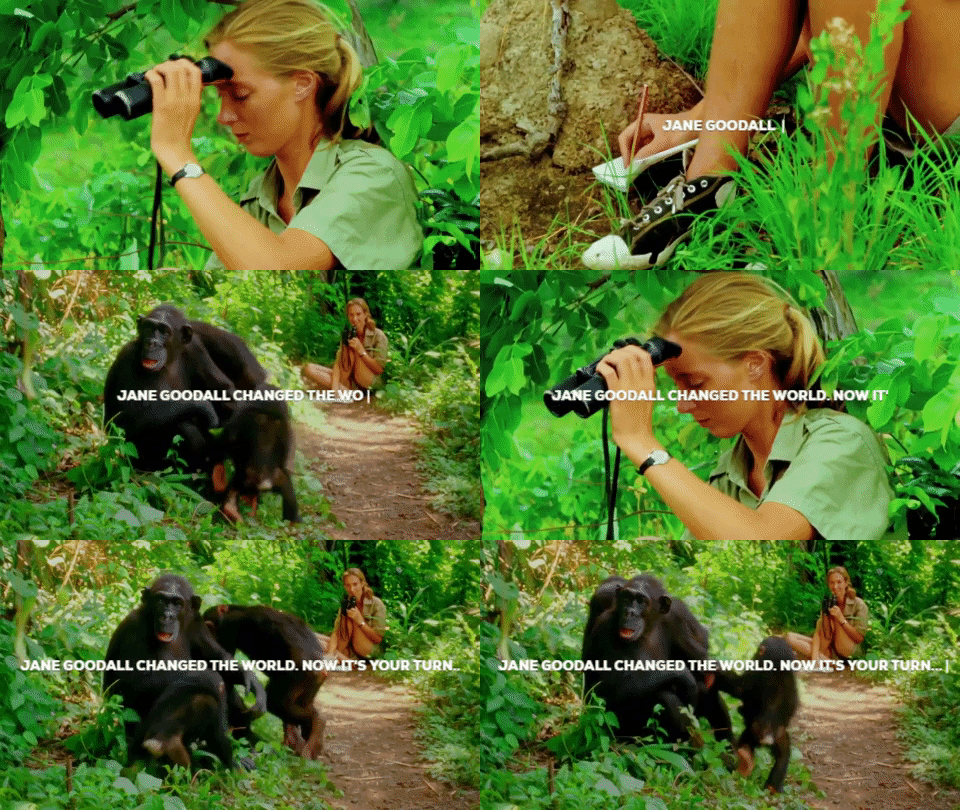
Jane Goodall, the renowned primatologist, has died at 91. She's known for her in-depth studies of chimpanzees in the wild. Her studies transformed scientific knowledge of the behaviors and emotions of humans as well as apes.
Goodall was a British-born ethologist and animal welfare advocate. She passed away while on a speaking tour in California.
The institute Goodall founded said she “revolutionized science” and was “a tireless advocate for the protection and restoration of our natural world,” in a statement. “She inspired curiosity, hope and compassion in countless people around the world,” the statement read.
Goodall not only transformed scientific knowledge about animals. She also shattered glass ceilings for women in science. For instance, she was a role model in a field where mostly men once worked. At 26, Goodall challenged existing scientific wisdom. She immersed herself in the world of chimps instead of watching them from a distance. She gave her chimp subjects names instead of numbers. This was very unique then.
Among other breakthroughs, Goodall found that chimps are much more like humans than once believed. They use tools. They eat meat. They also hunt prey for food. And they go to war. Goodall found that chimps have complex emotions, too. She found they displayed affection for each other. She observed strong bonds between mothers and infants. And she observed them adopting orphans.
Goodall was featured in many documentaries. She became a fierce advocate for the protection of animals.
"We have learned so much. We've learned how alike chimpanzees are to us, which has changed science perception,” Goodall told People magazine in 2020. “Humans were on a pinnacle, and there was an unbridgeable chasm between us and the rest of the animal kingdom ... “Now we have a different way of thinking about our relationship with all the other animals."
Reflect: How has learning about animals or nature ever changed the way you think about humans or the world around you?
Edited: Gif of Jane Goodall and chimps from Jane Goodall Institute.
News brought to you by 
Read More News Stories Today!