It's Satellites Vs. Telescopes in the Star Wars of Space Science
January 7, 2026

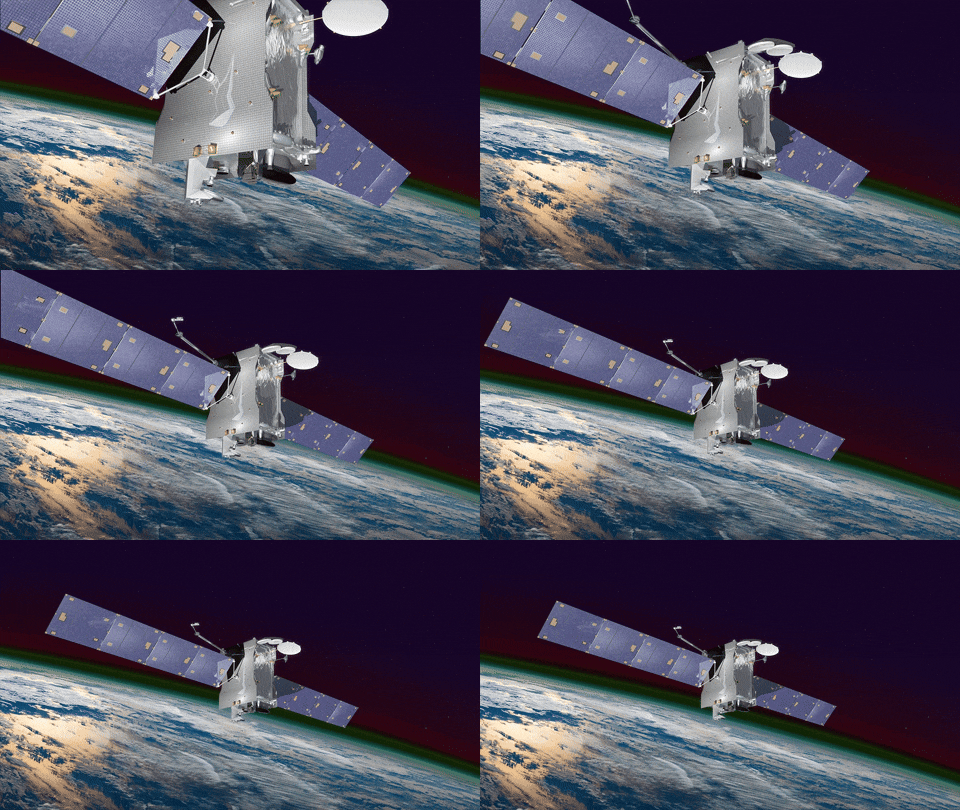
Picture this: an astronomer has a $16 billion high-powered telescope trained on a galaxy far, far away. It is poised to capture dazzling images of a never-before-seen planet or star. Just as the scope starts to relay the data, though, a shiny chrome  satellite whizzes past. It blocks the view and ruins the shot. Does she scream? Shout? Quit? If projections from a new study published in the journal Nature are correct, a lot of astronomers are about to find out.
There are about 15,000 active satellites orbiting Earth right now. Hundreds of defunct ones also float with them. Combined, they form a growing field of space junk. By the year 2040, the number of objects in orbit could surge to at least 560,000. Companies such as Amazon, Google, and Elon Musk’s Starlink are competing for space in space. Starlink alone has sent up over 7,800 of our current satellites.
For stargazers, that debris field is a problem.
"As telescopes stare at the universe attempting to unveil distant galaxies, planets and asteroids, satellites sometimes cross in front of their cameras," NASA’s Alejandro Borlaff told Reuters. He is the lead author of the study. The effects are "bright traces of light that erase the dim signal that we receive from the cosmos."
Borlaff calls them satellite “photo-bomb(s)." He says they ruin telescope images. Between 2018 and 2021, about 4% of the pics snapped by NASA’s massive Hubble Telescope were ruined by these types of photo bombs. Borlaff estimates that by 2040, up to 96% of the data received from such research scopes could be tainted by satellites.
“That’s a staggering number,” Borlaff said.
Reflect: How should people balance the benefits of new technology with the problems it can cause?
Gif of satellite from Giphy courtesy of @nasa.
News brought to you by 
Read More News Stories Today!