In Tanzania, Reading Maven Sheds Light on Literacy for Young Readers
January 31, 2025

Thought Question: If you could turn an everyday object into something that helps people, what would you choose and how would it work?
As a child growing up in a rural region of East Africa’s Tanzania, Innocent James loved to read. But when he finished his evening chores and the sun would set, James would need to fire up a kerosene lamp to see. That’s because there was no electricity where he lived.
That kerosene oil sometimes was too expensive for his family to afford. So he'd be forced to forgo reading on those nights.
As an adult, James thought about how many children growing up in his country still face that same hurdle. Across Africa, roughly 600 million do not have electricity in their homes. So James brainstormed a solution. He made school backpacks that include solar panels that can charge up a reading light.
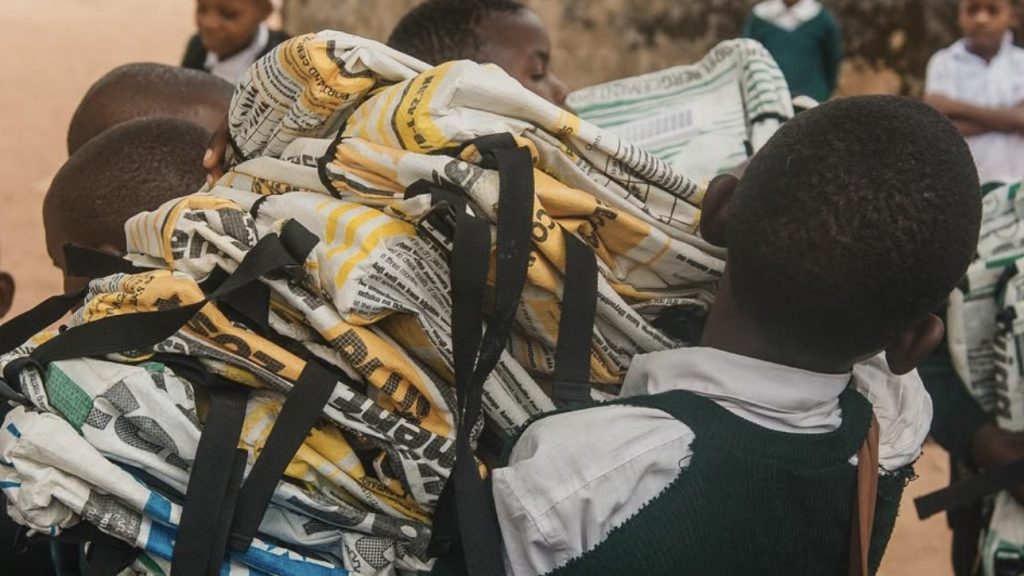
James experimented with the idea by sewing small solar panels on discarded cement bags. That evolved into a full-scale company. It's called Soma Bags (“Reading Bags” in Swahili). James has sold 36,000 such bags to parents and kids across Tanzania and Africa.
The backpacks were not James’ only effort to foster a love of reading in African youths. His parents were both schoolteachers, and they instilled a love of books in him. But while in college in Mwanza, he was shocked by the number of students who skipped their classes to play video games in local gaming cafes. “I was frustrated,” James, now 33, told CNN. “I could see that the problem was much, much bigger than I thought.”
So just before his last semester, he bought a cart and toted books around to local schools. It drew hundreds of kids to his reading clubs.
Between solar backpacks and his reading clubs, James has helped countless children find the same passion for reading that he has.
Photo of student giving out Soma Bags from Instagram courtesy of @somabagstz.
News brought to you by 
Read More News Stories Today!