'Heat Index,' 'El Niño,' 'Wet Bulb': Talking About This Summer's Heat
June 23, 2026

The US National Oceanic and Atmospheric Administration has warned that 2026 is likely to be one of the five hottest years in recorded history. Early heat waves in the US West and a hot wash of El Niño winds blowing across the country all summer have only pushed forecasts higher. It is highly likely that extreme heat will be a major story throughout the summer. Here are some terms to know as summer heat rolls in:
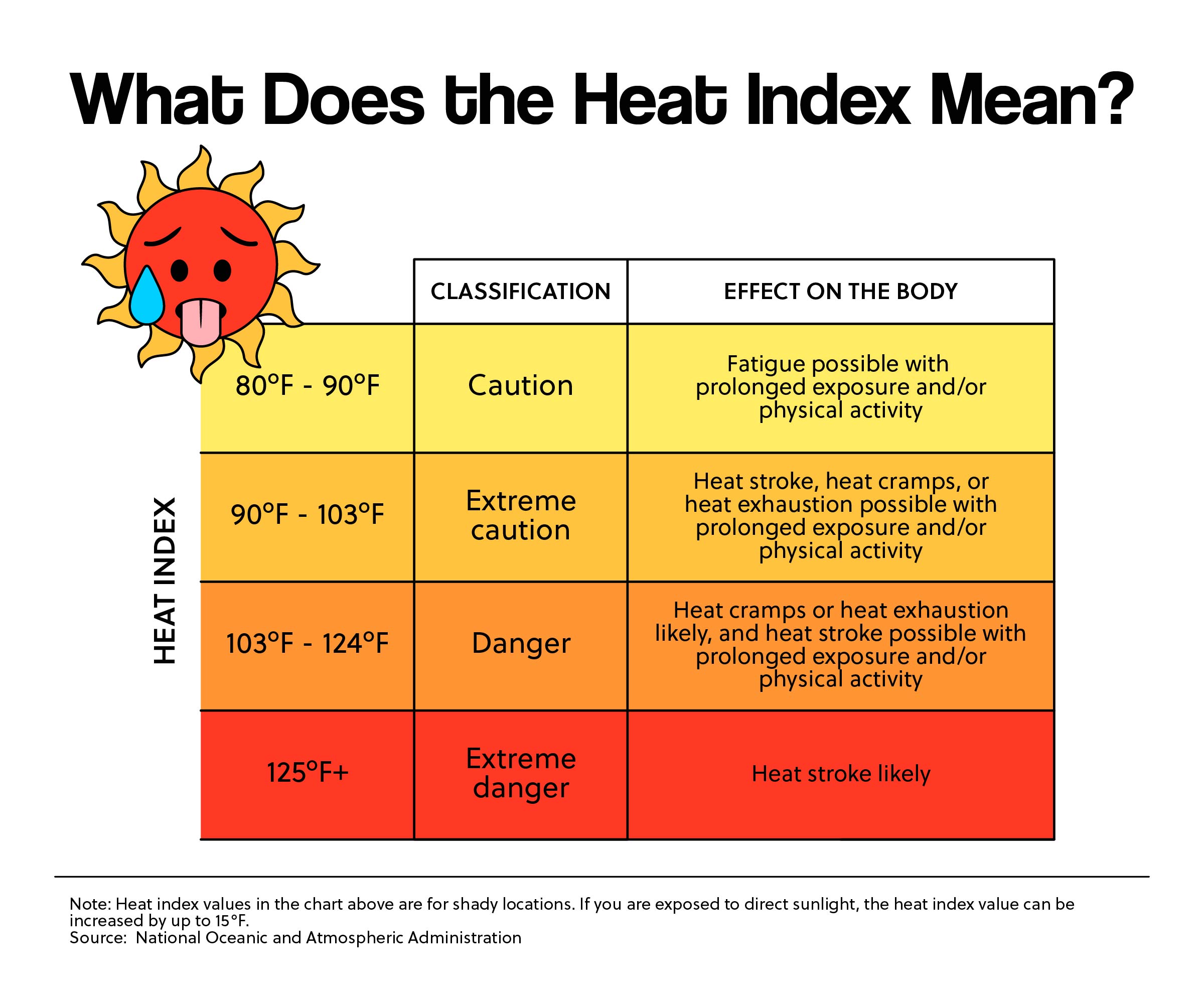
Heat Index: Also called the “feels like” temperature. The heat index factors in both temperature and humidity, or the amount of moisture in the air.
Heat Dome: A high-pressure system that traps hot air over a region like a lid. If a heat wave lingers over an area for days or weeks, a heat dome is often the reason for it.
El Niño: A weakening of Pacific Ocean currents that results in wind pattern shifts. Warmer, wetter winds blow west-to-east across the US. The result is often hotter, drier Northern weather and a higher chance of flooding rains across the South.
Heat Exhaustion/Heat Stroke: These are among the most severe heat-related illnesses humans can suffer. Heat exhaustion occurs when the body loses too much water and sodium through sweating. It causes dizziness, nausea, and other health complications. If left untreated, it can turn into heat stroke. That's when the body loses its ability to cool itself. Heat stroke can lead to seizures, and even death.
Wet Bulb Temperature: Approximately 95 degrees Fahrenheit. It's the temperature at which the human body can no longer cool itself just by sweating. Heat exhaustion and heat stroke are much more likely to occur if a person is exposed to warmth above the wet bulb temperature for too long.
Urban Heat Island: This concept appears on heat maps with the hottest areas often found in the middle of the biggest cities. That’s because the asphalt roads, lack of trees, and number of cars burning carbon in cities create and trap warmth. Due to these factors, city centers look like islands of heat.
Reflect: When you hear about extreme heat in the news, how does it affect the choices you make in your own life?
News brought to you by 
Read More News Stories Today!