Get Set to Spring Forward Sunday
March 7, 2025

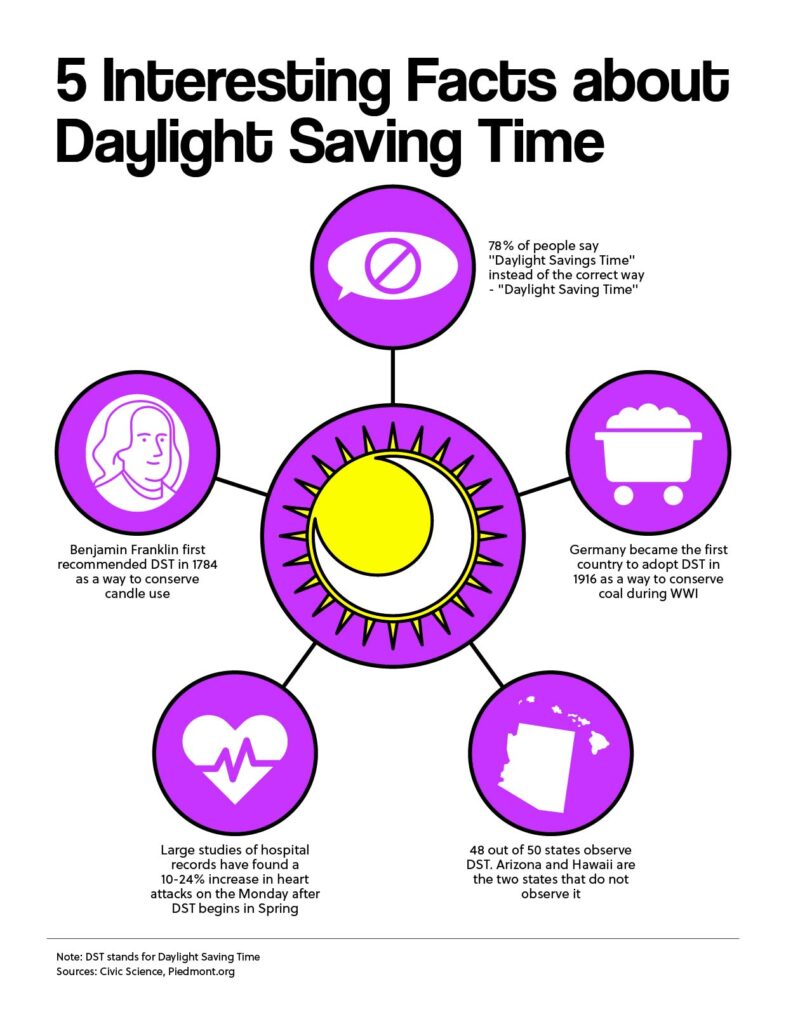
Thought Question: Do you think the country’s current policy toward Daylight Saving Time should change or remain the same? Why?
It’s that time of year again …
Whether it makes you grumble or cheer, most US states on Sunday will see their clocks “spring forward” an hour, from 2am to 3am. It marks the part of the year known as Daylight Saving Time (DST), where we see darker mornings and later sunsets.
Installed country-wide (except for Hawaii and Arizona) with the Uniform Time Act in 1966, Daylight Saving remains a hot debate. For some, the springtime tumble forward is a boon. “The really, really awesome advantage is the bright evenings, right?” Anne Buckle, web editor at timeanddate.com, told The Associated Press. “It is actually having hours of daylight after you come home from work to spend time with your family or activities. And that is wonderful.”
Others, though, count DST (and the process of switching back and forth at all) a drag on the pacing of their year. Among its critics: President Trump.
“The Republican Party will use its best efforts to eliminate Daylight Saving Time,” Trump posted to Truth Social in December. “Daylight Saving Time is inconvenient, and very costly to our Nation.”
Studies have shown that, in the 70 countries worldwide that observe DST, rates of poor sleep, car accidents, and heart attacks go up in the days after the time change. The spring-forward “loss” of an hour of sleep can be tough on kids. Despite its effects, DST is here to stay for now. Efforts in Congress to make DST permanent stalled in both 2022 and 2023.
News brought to you by 
Read More News Stories Today!