
For Northern Hemisphere, Spring Springs Today
March 20, 2026

 spring the moment it arrives? If you live in the US, set your clocks for 10:46am Eastern Daylight Time this morning, and you’ll be ready.
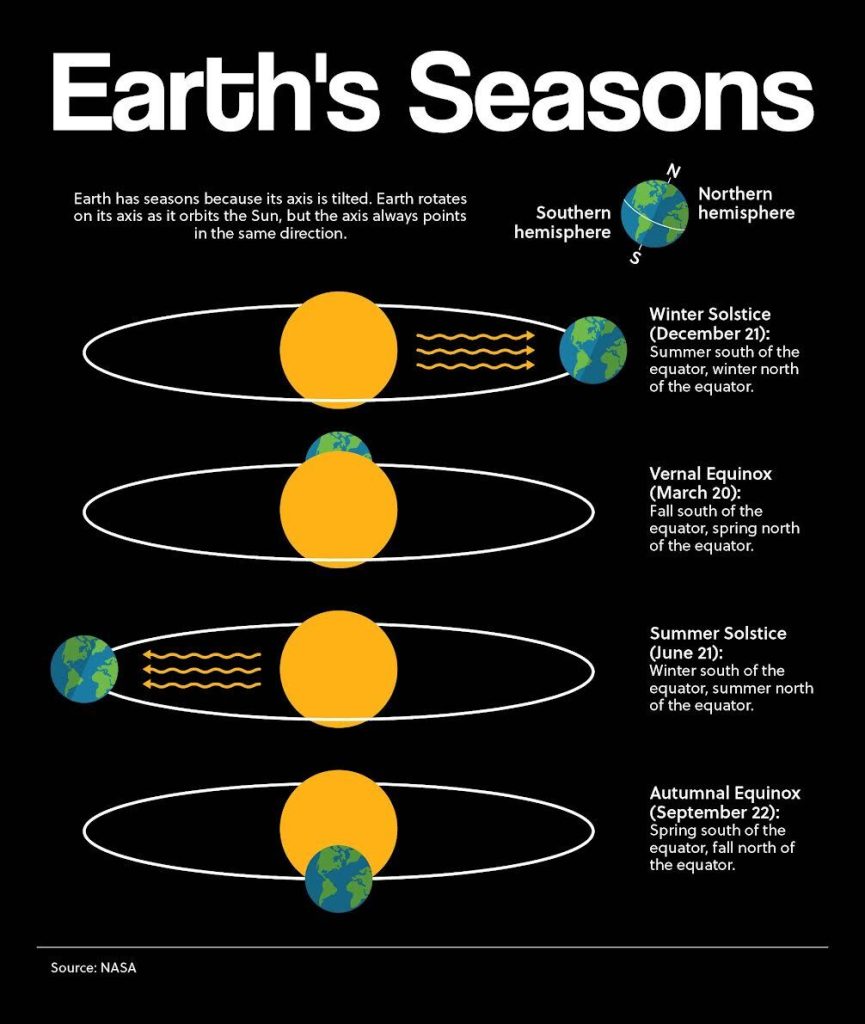
 The onset of spring is also known as the vernal equinox. "Equi" means equal, and "nox" means night. It heralds the moment the sun’s rays shine directly across the equator. That's the imaginary line forming a belt around the widest part of Earth. For folks in the Northern Hemisphere, the equinox marks the start of warmer weather and longer days. The change comes as the sun’s energy directly hits the upper part of our tilted planet.
Between March and June, the strength of the sun’s power will travel northward. It'll reach its apex around Sunday, June 21. That's the summer solstice. The sun's power will then start to dip back toward the equator. During this time, the Northern Hemisphere heads toward fall. The autumnal equinox is in September. Between now and the solstice, places between 30 degrees north latitude and 60 degrees north latitude will gain between 2-3 minutes of sunlight per day. This includes almost all of the US.
For those in the Southern Hemisphere, today is the autumnal equinox. As US days get longer, hours of sunlight will dwindle for places south of the equator. This includes countries in South America, Africa, and Australia.
There's one oddity though. If you live with a meteorologist, they might act as though spring had sprung a long time ago. That’s because weather buffs key into “meteorological spring,” rather than “astronomical spring.” Based on changing weather patterns in the Northern Hemisphere rather than Earth's position relative to the sun, “meteorological spring” begins March 1 each year.
Reflect: What are some of your favorite springtime traditions or holidays?
News brought to you by 
Read More News Stories Today!