El Niño Could Push Global Temperatures Past Point of No Return, Scientists Warn
June 5, 2026

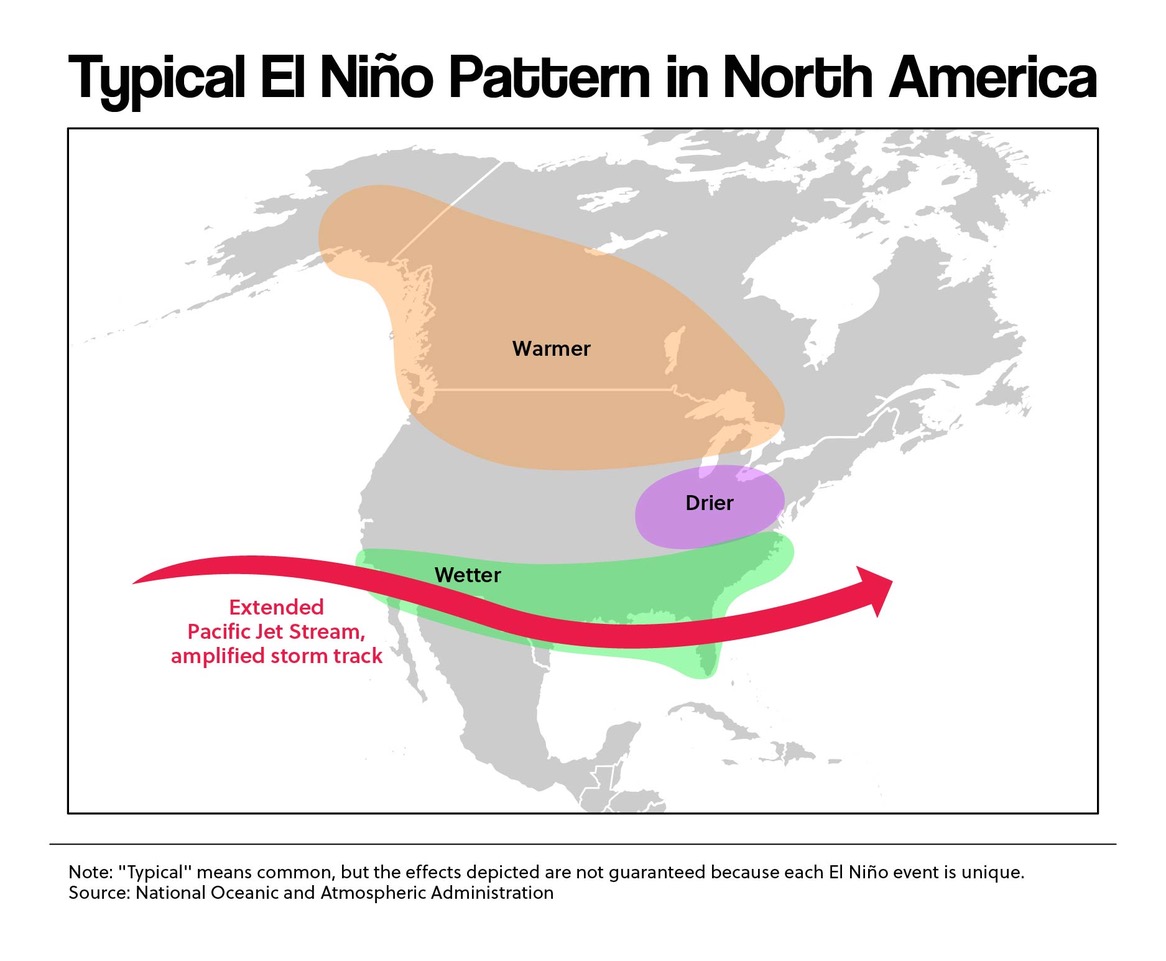
Climate scientists are closely watching the warming El Niño weather pattern. It'll soon arrive from the Pacific Ocean. They worry it will push the yearly average global temperature above the 1.5 degrees Celsius tipping point. That's the point when climate impacts can't be reversed.
El Niño means “Christ Child” or “The Boy” in Spanish. It refers to a warming of the ocean surface in the central and eastern Pacific Ocean. Under normal conditions, winds along the ocean’s surface blow from east to west. But during an El Niño cycle, these winds weaken. In some cases, winds also start blowing in a reversed route, from west to east. This can bring warm air and high heat across North America, Europe, and the globe. An El Niño cycle occurs about every two to 10 years.
Weather forecasts for this year’s El Niño suggest a strong pattern. It's one that could bring extreme heat to a planet already seeing rising temps. Scientific studies and political agreements use the 1.5 degrees Celsius rise as a marker that could lock in a time of storms, wildfires, drought, and rising seas that wreak havoc.
Indeed, a recent study said that a strong El Niño over the next 12 to 18 months would make those extreme weather patterns a fixture. It also said this change might not be able to be reversed through human means.
Friederike Otto is a climate science professor. She teaches at Imperial College London. Otto told Climate Home News that the El Niño itself is “not the reason to freak out.” But she explained that it comes as global warming spurred by humans, mainly through the burning of fossil fuels, has already heated the planet.
“El Niño is a natural (event) that comes and goes,” Otto told climate reporters last week. She said what makes this time so serious is not the event itself or whether it's a "Super El Niño" or not. She said it’s concerning because it is taking place in a swiftly changing climate.
Reflect: How might your daily life change if your area experienced more extreme weather?
News brought to you by 
Read More News Stories Today!