
Clever Hawk Adapts to Cityscape to Hunt
June 6, 2025

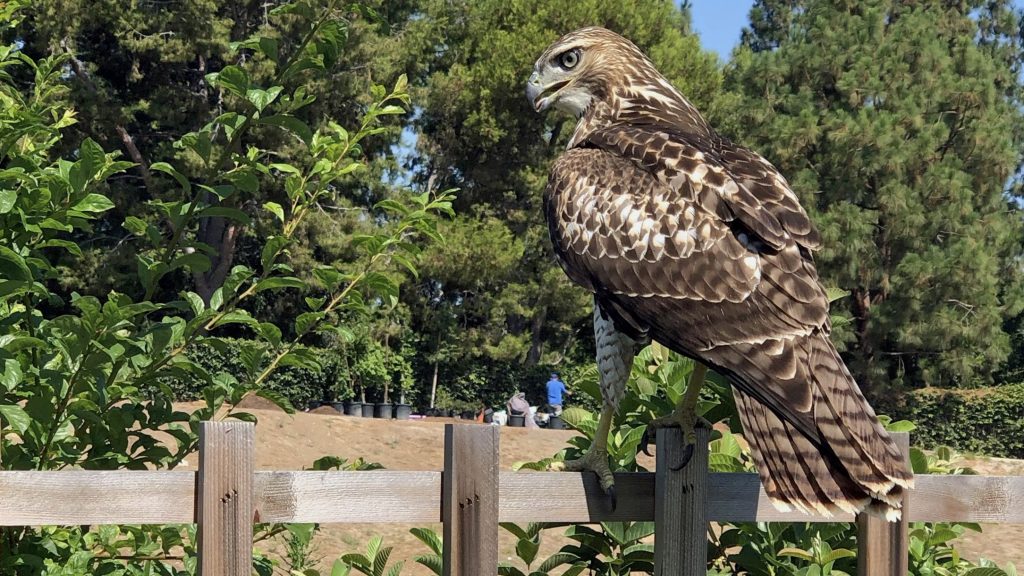
The growth of cities has proven challenging for many animal species. But some clever animals have managed to adapt to an urban environment. One Cooper’s hawk in West Orange, New Jersey, has learned to use traffic patterns to help it hunt.
Zoologist Vladimir Dinets spent a winter watching the young hawk as it scanned city streets for other small birds. Quickly, Dinets noticed a few characteristics of the raptor’s hunts. First, it tended to stick to one spot on a house-lined street near a busy intersection. And second, it was wildly successful at catching prey.
Dinets published his research in the journal Frontiers in Ethology. He described the hawk’s hunting strategy as “an impressive feat of intelligence.” It was one never before observed among birds of prey. It went as follows:
1 — Residents of a house near the intersection threw breadcrumbs out for small birds, which flocked to the yard.
2 — The hawk perched on a nearby roof to wait.
3 — Pedestrians hit the crossing button.
4 — Traffic lights switched to red to allow the pedestrians to cross. Traffic stopped and created a line of cars backed up past the breadcrumb house.
5 — The crossing sign beeped so visually-impaired people would know it’s safe to cross.
6 — Signaled by the beep, the hawk swooped down. It then used the line of backed-up cars to hide its approach from the small birds eating breadcrumbs.
7 — The hawk darted from between two cars, striking the feasting birds before they could escape.
Dinets further observed that the hawk didn’t hunt on the street on weekends. It only hunted on weekdays when traffic fit the correct pattern. That recognition and planning, he argues, suggests birds of prey are smarter than humans may have thought.
Reflect: What are some clever ways animals or people learn to adapt to their surroundings?
Photo of Cooper’s hawk from Unsplash courtesy of Jim Strasma.
News brought to you by 
Read More News Stories Today!