Baby Exoplanet' Challenges Scientific Formation
December 6, 2024

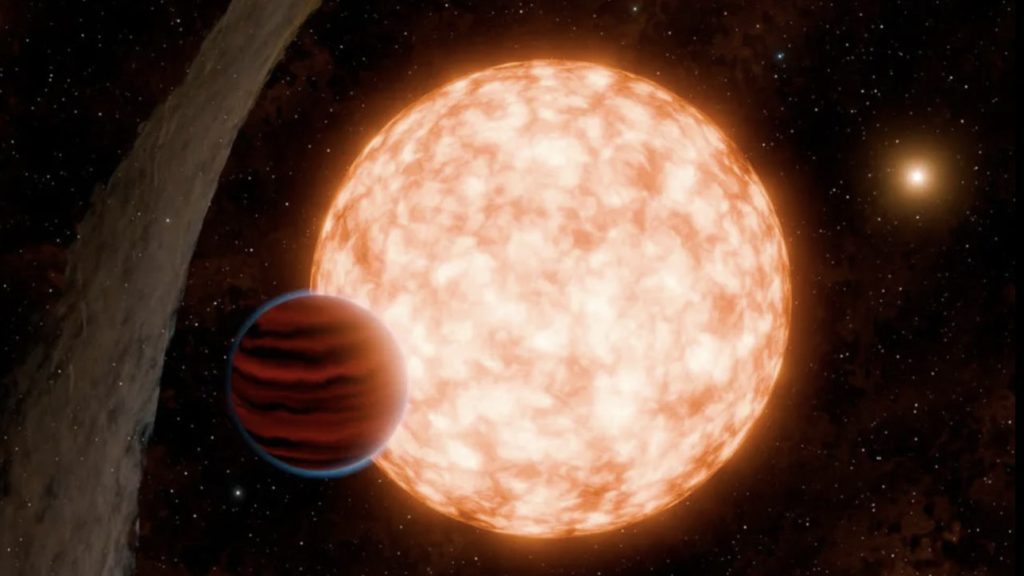
Astronomers are oohing and ahhing over discovering a “baby exoplanet.” It's 430 light years from Earth. It's perhaps the youngest ever found. It's three million years old. That's a blink of an eye in cosmic terms.
Scientists say the finding of IRAS 04125+2902 B (aka TIDYE-1b) in the Taurus Molecular Cloud impacts long-held beliefs about how fast planets form. They also say it could provide more clues about how that process works. By contrast, our Earth is 4.5 billion years old. The new planet was found by a University of North Carolina (UNC) at Chapel Hill graduate student. It's described in a study published in the journal Nature.
The discovery is viewed as a surprise. That's because developing planets are commonly shrouded in debris fields, from which they are formed, that surround stars. Older planets are discovered by telescopes during “transits.” That's when the light of a star dims due to a planet passing between it and the viewer. TIDYE-1b was found because the debris field in its path seems to be warped, scientists say.
“We don’t really know how long it takes for planets to form,” study co-author and UNC Chapel Hill astronomer Andrew Mann told Reuters. “So do planets form in one million years? Five? Ten?”
Scientists believe it took 10-20 million years for the Earth to form. That's on the lower end of the 10-40 million year range of other planets discovered through the transit method. Scientists believe TIDYE-1b could evolve into a super-Earth or mini-Neptune.
Since not many young "transiting systems" are known, it's vital to look for more to better understand how Earth evolved, Madyson Barber, the student who found the planet, told ABC News.
Reflect: How do you think learning about new discoveries in space can help us understand our world better?
Photo of artist impression of IRAS 04125+2902 B from Wikimedia Commons courtesy of NASA.
News brought to you by 
Read More News Stories Today!