As Reefs Face Mass Bleaching, 'Miracle' Coral Thrives in Warming World
April 24, 2025

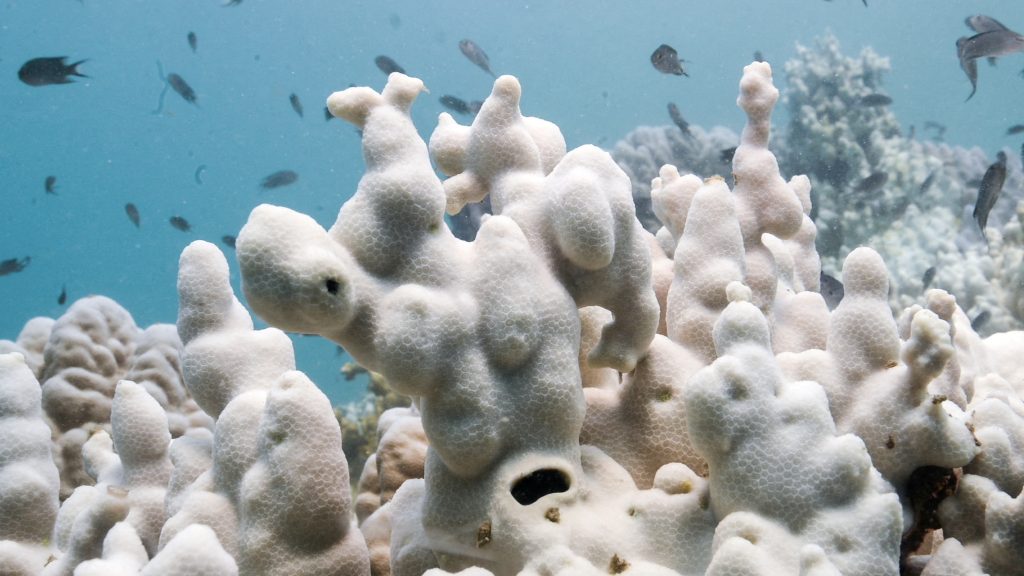
A report issued Wednesday by the International Coral Reef Initiative suggests that up to 84% of the world’s coral reefs have been struck by “bleaching” in the past year. It marks the worst such event in recorded history. A new find in the South Pacific, though, has experts hopeful they’ve found a way to help.
Corals are tiny marine invertebrates. They live in intricate structures formed from calcium carbonate. Over time, they can build so many of these “skeletons” that it forms an entire underwater habitat. It’s called a “reef." Coral reefs are vital parts of marine ecosystems. They provide shelter to thousands of other species. They also serve as a buffer against ocean currents and storm surges that batter coastlines.
Coral live symbiotically with algae, a marine plant. The algae give corals their bright colors and provide a source of food. When water temperatures rise, though, the algae are expelled. Corals turn white as a result, or “bleached.” Without a food source, many corals don’t survive the bleaching event.
Most species of coral are vulnerable to bleaching. Due to climate change, the world's oceans have reached record high temperatures. That has threatened reefs worldwide. But a team of French scientists has found a species of coral that seems to thrive in warmer waters. They found it in a lagoon off the island of Tatakoto. The waters there average 7 to 9 degrees Fahrenheit warmer than the global average.
The French team announced its findings Tuesday. They believe the Tatakoto corals have an adaptation that lets them withstand the heat. If that’s true, they say, then breeding the coral and moving it to threatened reefs around the world may help protect them against the effects of climate change.
Reflect: What is something in nature that you think is worth protecting, and why does it matter to you?
Photo of bleached corals from Reuters.
News brought to you by 
Read More News Stories Today!