An Eye Exam for Humpback Whales
June 4, 2025

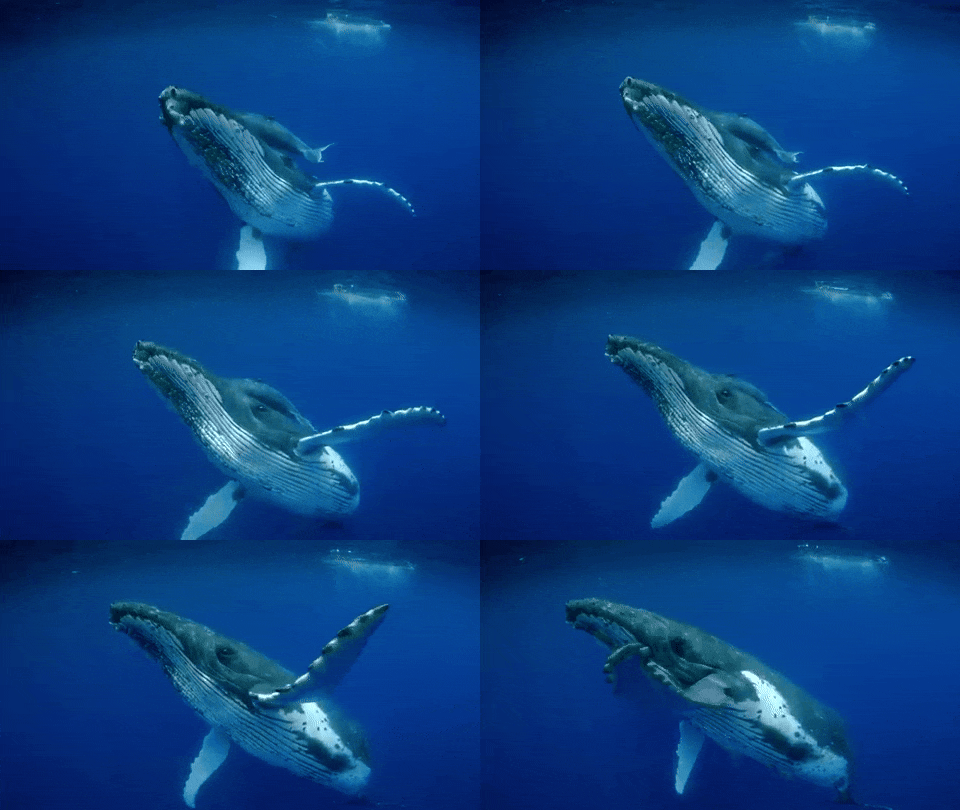
Humpback whales have eyes as big as softballs. But that doesn’t mean they could see one if it was pitched at them.
While a fast pitch isn't a problem for whales, fishing nets and boat propellers are. Those threats, as well as other man-made hazards, are the main causes of death for humpbacks and other whale species. A major reason for that is they can't see such dangers, a new study shows.
Marine biologist Jacob Bolin of the University of North Carolina Wilmington studied the eye of a humpback whale. He found that the eye was about the size of a grapefruit. But he also found that much of it was sclera. That’s the white part of the eye. It helps an eyeball keep its round shape. But sclera doesn’t do much in the process of capturing light and sending it to the brain for interpretation (AKA “seeing”).
All that sclera doesn’t leave room for many retinal ganglion cells. Retinal ganglia receive light and convert it into info for the brain. Fewer of those cells mean a cloudier image. A sharp-eyed owl or falcon has 70,000 retinal ganglia per square millimeter of eye. Humans have up to 40,000 per square millimeter. But humpback whales? They max out at about 180 over the same area.
Experts say humpback whales did not need great eyesight for survival. That's because they communicate with song, eat by straining massive amounts of water through their baleen, and have no natural predators. But human-made objects in the oceans have changed that. To keep the species safe, Bolin and his team argue, humans need to think about ways to help whales better perceive human-made objects.
Reflect: Why is it important to think about how our actions affect animals and their homes?
Gif of humpback whale from GIPHY.
News brought to you by 
Read More News Stories Today!