Amid Demand for Healthier School Meals, Trump Administration Cuts School Food Program
May 28, 2025

Thought Question: How do you think the foods you eat every day influence your energy, mood, and ability to focus?
School meals would not seem to fall into the grouping of a hotly discussed political topic. But in the current polarized climate of the US, it seems just about anything is in the crosshairs.
Take, for example, the Trump administration's efforts to pare down the US government. To cut spending, it has slashed a school nutrition assistance program. The federal Local Food for Schools Cooperative Agreement Program (LFS) was set to give $660 million to school systems and child care facilities in 2025. But in March, the White House wiped out LFS.
Meanwhile, a spending bill backed by Republicans is now moving through Congress. It would cut SNAP by about $300 billion. That's the major food aid program in the US.
The cuts in food aid come as US Health and Human Services Director Robert F. Kennedy Jr. blames schools for serving unhealthy food. He claims it's filled with food dyes. He also claims it's filled with additives.
Some school leaders say his claims about school-served foods as the US ends major food aid sends a mixed message to teachers, parents, and children. Lindsay Aguilar runs the Tucson Unified School District's nutrition program in Arizona. Aguilar told Reuters that killing the LFS program will poorly impact kids’ nutrition in her district.
Aguilar noted that 29.5% of district families had an income low enough to receive federal food aid in the last 12 months. That’s far higher than the US average of 19.6%. Many families live in food deserts. That's where there is scant access to low-cost fresh food. Large grocery stores are also far away.
If you want to make the US healthy again, you must invest in school food programs rather than cutting them, Aguilar told Reuters. "To me, it’s like, walk the talk.”
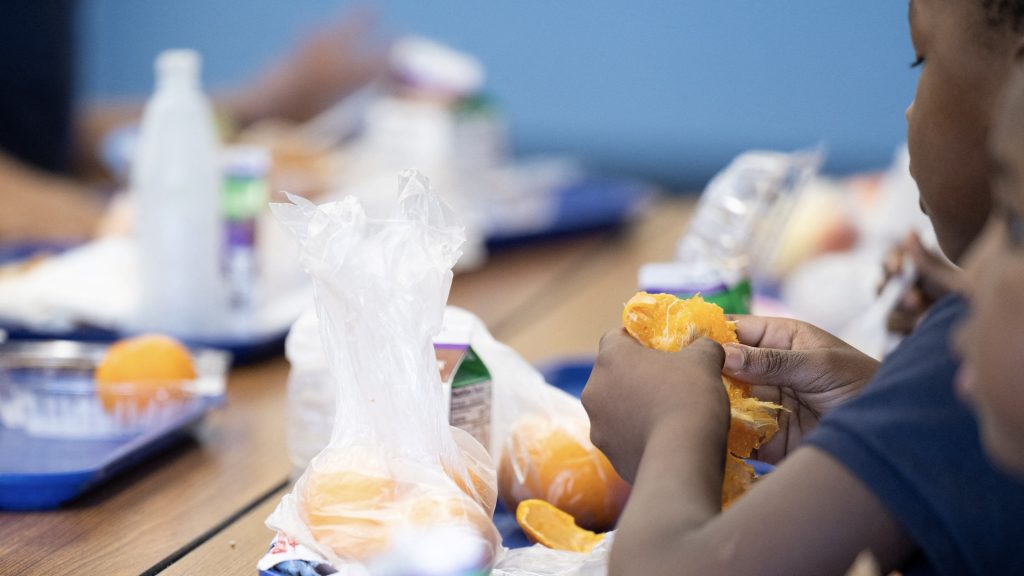
Photo of a student eating a local orange for lunch at an elementary School in Arizona from Reuters.
News brought to you by 
Read More News Stories Today!